A320neo replacement, a longer A350 and a larger A220 are in Airbus' sights
Airbus has at least three projects up its sleeve for its family of commercial aircraft, the company’s CEO, Guillaume Faury, revealed in an interview with Aviation Week.
The most ambitious and complex is the successor to the A320neo family, a program that has been studied for a long time and was even thought of as a hydrogen-powered aircraft.
The manufacturer, however, realized that adopting the technology would come up against a series of bureaucratic and regulatory barriers that do not depend solely on it.

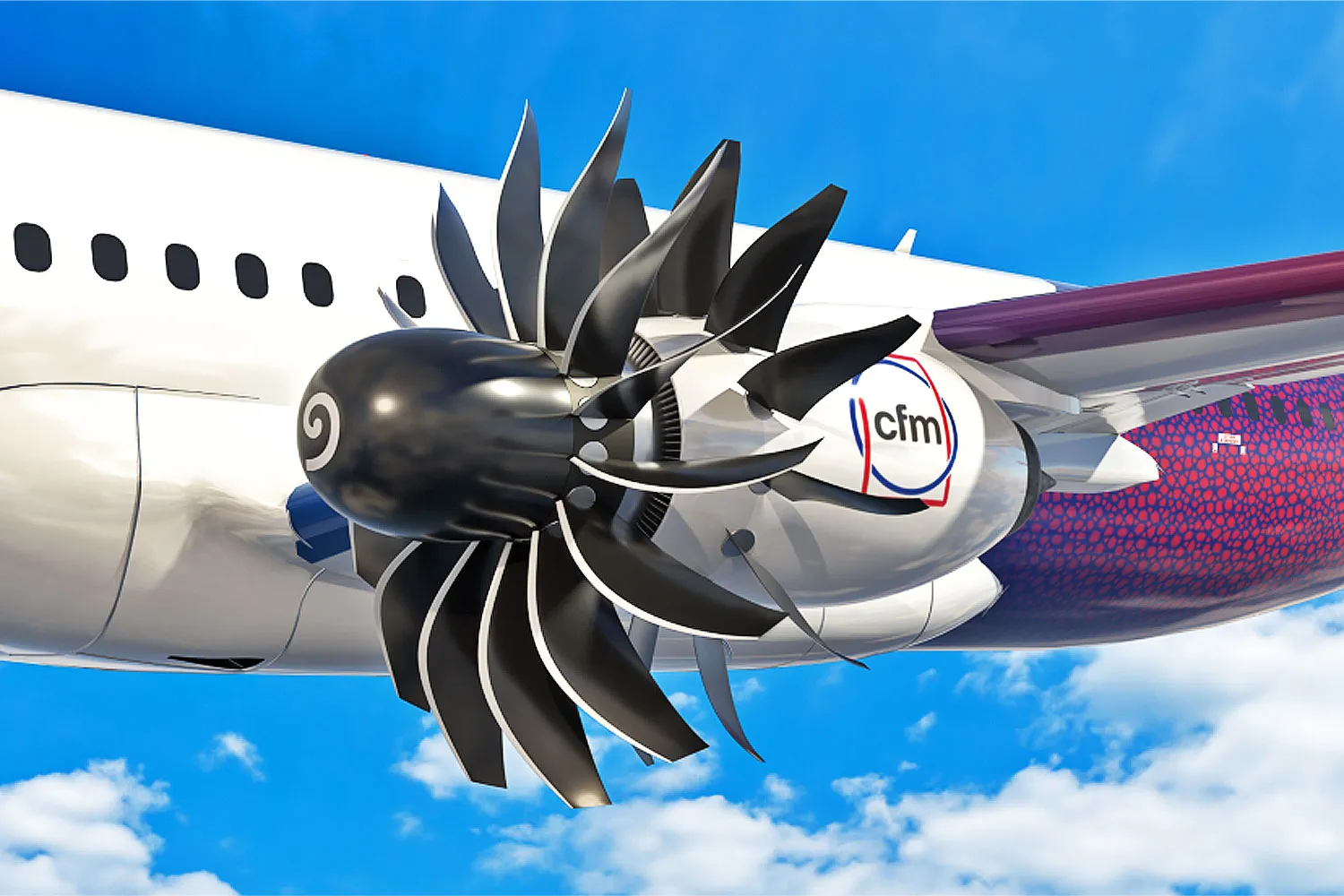
Airbus recently revealed the first drafts of an aircraft that could be powered by “open rotor” technology, like CFM’s Rise engine.
Now, Faury has revealed a deadline for the program to kick off, 2027, when the company is expected to finalize an engine that will power the new plane.
Among the options is the open rotor but also a more efficient turbofan, but the aircraft will not be an update of the A320neo family.
The plan is for the new family to be launched in 2030 and reach the market in 2037 or 2038, a timeline that the chief executive considers the ‘sweet spot’ for the market.

A350 even longer
Guillaume also mentioned two projects to stretch existing planes, the A350 and the A220.
The jet originally developed by Bombardier has already been the subject of much speculation about an ‘A220-500’ or A221 variant, but to date Airbus has been evasive, saying that it is not the ideal time for this.
However, an announcement could come sooner than expected, according to sources at the magazine.

The widebody may indeed gain a variant even larger than the A350-1000. It would be a response to the delayed Boeing 777X, which in its larger-capacity variant can carry 426 passengers in two classes.
According to Faury, an even more stretched A350 is a natural evolution of the product line, but he sees no need to create more diversity in the portfolio amid restrictions on production capacity.
In any case, the Paris Air Show 2025, which begins next week, will be a perfect stage for some of these ideas to become reality, perhaps.

About the Author

Ricardo Meier
Creator of the website that started in 1996 as a magazine. He also writes on Brazilian websites AUTOO, MOTOO and MetrôCPTM.


