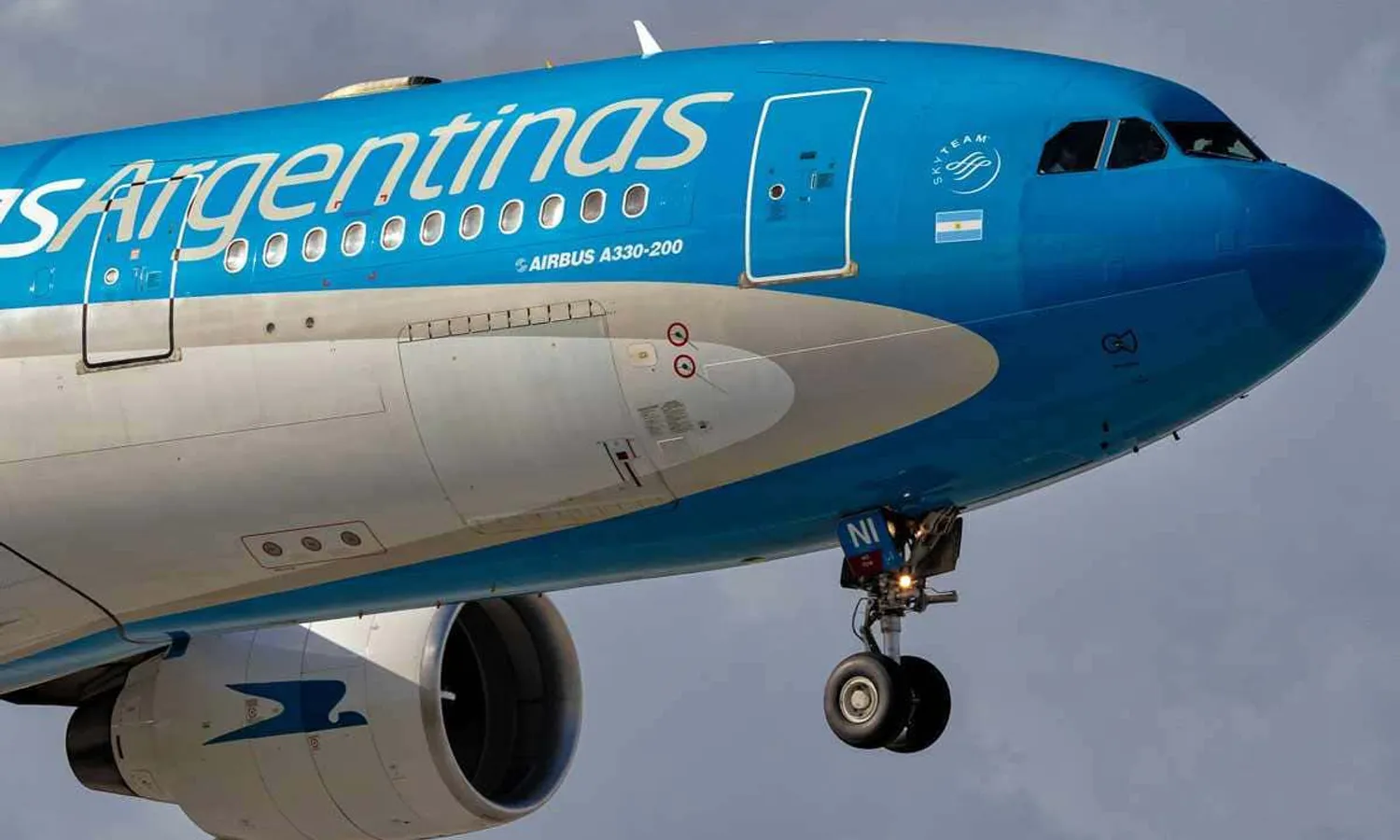
Aerolineas Argentinas will no longer receive government funding to operate
Aerolíneas Argentinas announced on April 30 that it will no longer rely on public funds to maintain its operations.
The announcement was made to the Argentine Ministry of Economy and shows an evolution in the company’s finances since the ultra-liberal Javier Milei took over as president of Argentina in 2024.
Initially, Milei intended to privatize Aerolíneas Argentinas, but faced fierce opposition from employees, unions and congressmen, preferring to adopt a “management shock” at the company, and is considering transferring the company’s assets to employees or going public.
In 2024, Aerolíneas recorded its first profit since it was nationalized: US$20 million at the operating level and US$150 million in financial profit.
Austerity measures
Among the measures adopted are flying more of its planes, increasing operations at the lucrative and competitive Jorge Newberry Airport, in downtown Buenos Aires.

In addition, the state-owned carrier entered into alliances with Gol for flights between Argentina and Brazil, and canceled international bases such as Havana and New York.
The workforce was reduced by 1,600 employees and 85 hierarchical positions were eliminated, amid the closure of eight directorships and 20 management positions.
There was also an agreement known as “social peace” with the unions to increase the productivity of operations with the same staff.
Last year, the airline transported 18.4 million passengers, compared to 13.8 million in 2023.
Between 2008 and 2023, Aerolíneas Argentinas received US$8 billion from the Argentine government. This figure is equivalent to what Alitalia received from the Italian Treasury between 2008 and 2020, with the difference that the Italian company had twice the fleet of its Argentine counterpart.
About the Author