Defense
Argentina receives first six F-16 fighters after ten years without supersonic jets
Argentina has officially received its first six Lockheed Martin F-16A/BM Fighting Falcon fighters, ending a decade without a supersonic interceptor. The jets landed at the Río IV Material Area on Friday, December 5, after a weeklong trip from Skrydstrup, Denmark, with stopovers in Zaragoza, Gando in Spain, and Natal in Brazil.
The arrival closes a long gap in the Argentine Air Force’s combat capability. Since the retirement of the Dassault Mirage III, the country had no true supersonic fighter. A-4AR attack jets were used as a temporary solution, mainly to keep pilots active rather than to guarantee real air defense.
The first batch includes four two-seat fighters with registrations M-1004, M-1005, M-1007, and M-1008, as well as two single-seat aircraft, M-1009 and M-1020. The transfer operation relied on strong logistical support, which included three USAF KC-135R Stratotankers, a Boeing 737-700, and an Argentine KC-130.

President Javier Milei will welcome the fighters on Saturday
Argentina’s path to recover its air superiority was long and marked by tight budgets and shifting political priorities. Previous governments reviewed offers from South Korea’s KAI, India’s HAL, Russia’s MiG, and the Pakistan-China PAC/Chengdu partnership, which at one point came close to a deal.
Several negotiations stalled due to British restrictions on aircraft that used UK-made components such as Martin Baker ejection seats. Momentum shifted when the United States backed the F-16 sale as part of a plan to limit China’s influence in the region. Once Washington supported the transfer, progress moved quickly.
On Saturday, the Air Force will hold an official induction ceremony for the jets under the 6th Fighter Group. A flyover of Buenos Aires is planned, with military leaders and government officials attending. The event marks a key moment for the country’s defense strategy.
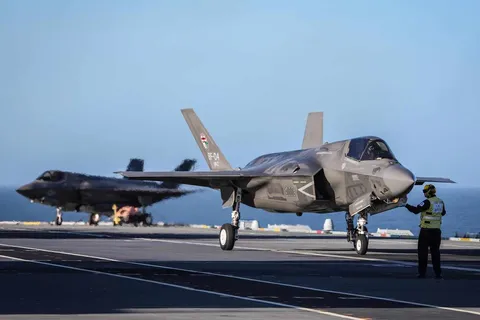
President Javier Milei will officially welcome the second-hand fighters purchased from Denmark, which has transitioned to the F-35.
According to the current schedule, a second group of six F-16A/Bs will join the fleet by the end of 2026. Full operational capability will take more time, but the arrival of the first fighters marks the beginning of Argentina’s return to a credible air defense posture.
About the Author

Ricardo Meier
Creator of the website that started in 1996 as a magazine. He also writes on Brazilian websites AUTOO, MOTOO and MetrôCPTM.