 Air Transport
Atlanta remains world’s busiest airport in 2025 as Dubai narrows the gap, OAG data shows
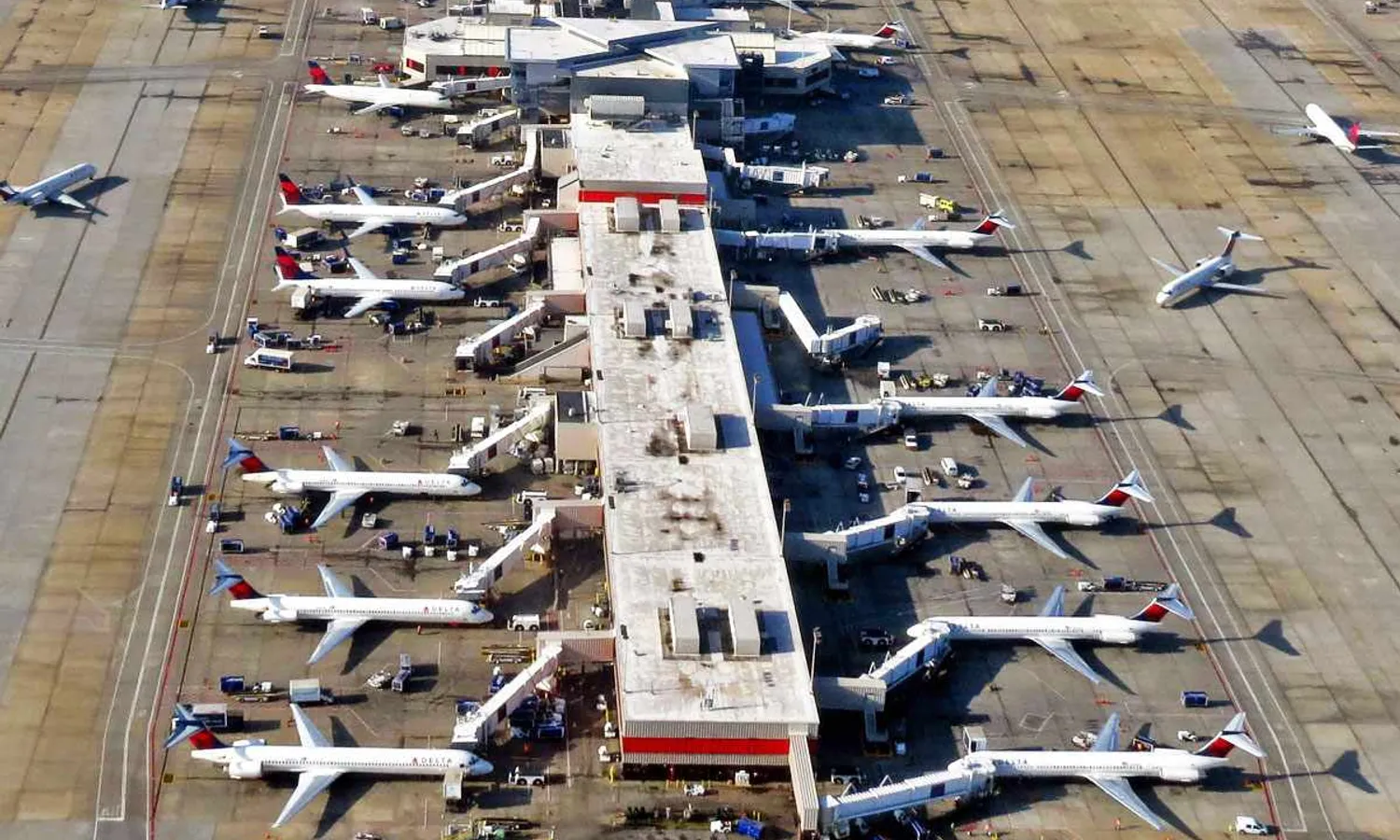
Atlanta Hartsfield-Jackson International Airport (ATL) retained its position as the world’s busiest airport in 2025, while Dubai International (DXB) continued to close the gap, according to new data released by aviation analytics firm OAG.
Based on scheduled airline capacity, Atlanta ranked first globally with 63.1 million seats offered across domestic and international flights during the year. Capacity at ATL increased by 1% compared with 2024 and is now broadly back in line with pre-pandemic levels, reflecting the strength of the U.S. domestic market.
Dubai International Airport ranked second worldwide with 62.4 million seats. OAG data shows capacity at DXB grew by 4% year on year and now stands 16% above 2019 levels, reinforcing its role as the world’s largest international hub.
Tokyo Haneda Airport remained in third place, offering 55.4 million seats in 2025 and maintaining stable capacity slightly above pre-pandemic volumes.
Among the global top ten, Chicago O’Hare and Istanbul Airport recorded the strongest year-on-year growth, with capacity increases of 8% and 6% respectively. Istanbul continues to stand out as one of the fastest-growing major hubs, with seat capacity now 22% higher than in 2019.

Overall, the 2025 ranking highlights the continued dominance of large domestic markets in the United States, alongside sustained expansion in the Middle East and the emergence of new global hubs since the pandemic.
OAG noted that Dubai’s growth trajectory is increasingly challenging Atlanta’s long-held leadership. While Atlanta retained the annual top spot for 2025, monthly data for January showed Dubai temporarily surpassing Atlanta in seat capacity, offering around 5.5 million seats compared with approximately 4.9 million at ATL. These monthly figures reflect seasonal dynamics and do not alter the full-year ranking.
John Grant, OAG’s chief analyst, said the latest results indicate that global aviation has entered a new phase of growth, with expanding international hubs such as Dubai and Istanbul reshaping network structures, while large domestic markets continue to underpin global capacity.
About the Author

Ricardo Meier
Creator of the website that started in 1996 as a magazine. He also writes on Brazilian websites AUTOO, MOTOO and MetrôCPTM.


