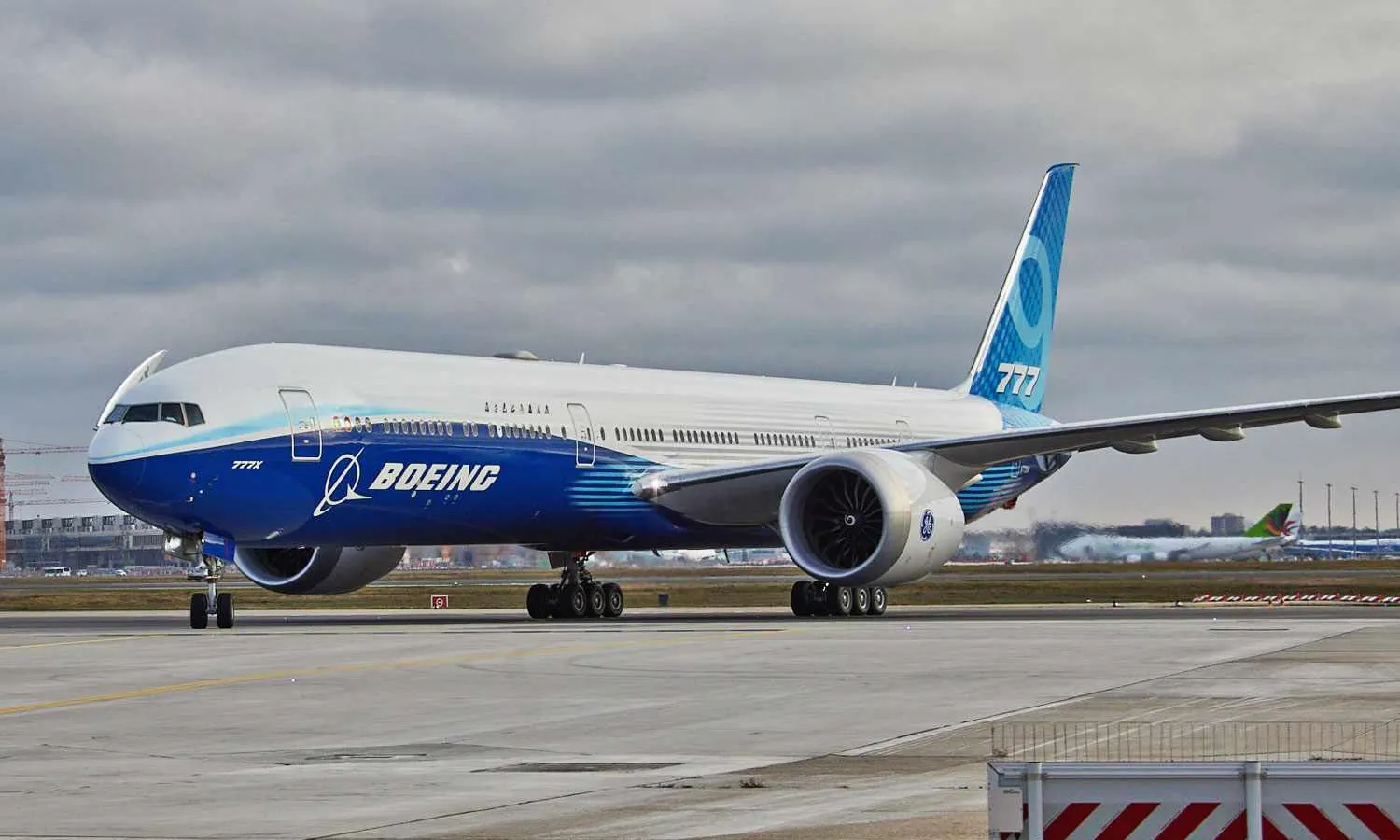
Boeing 777X completed four months without flying while waiting for a solution to engine thrust links
Since August 15, the 777-9 widebody test fleet has been grounded after Boeing found cracks in thrust links on the engines of one of the four aircraft.
In these four months, however, little has been known about the resolution of the problem.
A few days ago, prototype WH004 (N779XZ) was seen receiving new thrust links, an indication that the jets may soon return to flying.
General Electric, which supplies the huge GE9X turbofan that exclusively equips the 777X series, is not the manufacturer of the part that presented problems, but ends up being influenced by the delay in the schedule.

In a letter to investors, GE said it expects engine shipments to Boeing to increase in 2025.
The planemaker, in turn, plans to obtain type certification in late 2025 and begin deliveries in 2026.
https://twitter.com/mattcawby/status/1866695661153902717
481 unfilled orders
With a capacity for about 430 passengers in two classes, the 777-9 is seen as an alternative by some airlines to take on long-haul routes with high demand.
This is a role previously played by large four-engine aircraft such as the Boeing 747 and the Airbus A380, but whose operating costs are almost prohibitive.
The shortage of more efficient aircraft, however, has forced some carriers to buy back part of the A380 fleet.
https://twitter.com/b777xlovers/status/1860710832772149425
The delay in the entry into service of the 777-9, the largest of the variants (there is also the longer-range 777-8 and the 777-8X freighter), has caused Boeing to store several aircraft at Paine Field Airport.
An image recently shared on social media shows about 18 Boeing 777-9s parked without paint or engines.
According to Boeing, there were 481 pending orders for the widebody as of November.
About the Author

Ricardo Meier
Creator of the website that started in 1996 as a magazine. He also writes on Brazilian websites AUTOO, MOTOO and MetrôCPTM.


