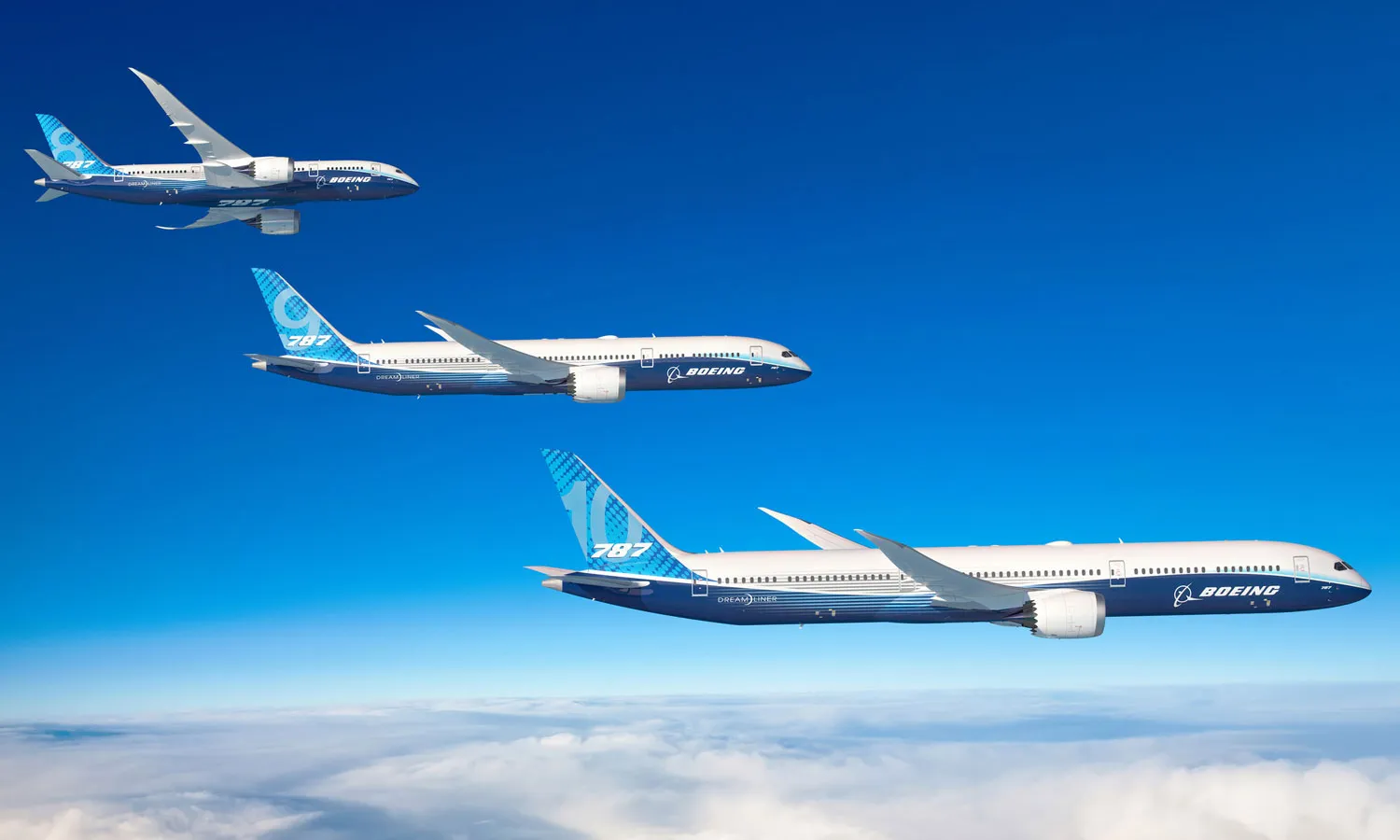
Boeing 787 Dreamliner surpasses 1 billion passengers carried
Boeing has announced that its 787 Dreamliner family has surpassed the milestone of 1 billion passengers transported worldwide.
The figure was reached in less than 14 years since the model entered commercial service in 2011, making it the fastest widebody aircraft to reach this number in aviation history.
With over 1,175 aircraft delivered, the Dreamliner has completed approximately 5 million flights and logged more than 30 million flight hours, according to Boeing.
The planemaker highlights that the 787 is now the best-selling widebody in commercial aviation history, with over 2,000 firm orders from 89 customers. A major part of the aircraft’s appeal lies in its focus on operational efficiency, offering up to 25% fuel savings compared to older aircraft through the use of composite materials, next-generation engines, and advanced onboard systems.

A Program of Highs and Lows
Despite the impressive numbers, the 787’s journey has not been without setbacks. From the outset, the program faced major delays — nearly three years behind schedule — due to integration issues among suppliers and assembly bottlenecks.
Once in service, the Dreamliner encountered several technical incidents that drew regulatory attention, including the well-publicized lithium-ion battery issues in 2013 that led to a temporary global grounding of the fleet. More recently, manufacturing flaws in structural components led to delivery halts between 2020 and 2022.
Even so, the Dreamliner retained strong market appeal and enabled the launch of over 425 new nonstop international routes previously considered uneconomical with larger aircraft. Today, the aircraft operates in more than 85 countries, serving over 520 airports.

Utilization rates are also high — each aircraft averages more than 12 hours of flight time per day, indicating sustained demand and reliability.
The 787 serves a wide variety of missions. On the one hand, it flies one of the longest routes in the world — from London to Perth, at 7,829 nautical miles. On the other, it flies one of the shortest: from Aruba to Curaçao, just 65 nautical miles away.
According to Boeing, the global 787 fleet carries more than 480,000 passengers per day across approximately 2,100 daily flights — totaling about 14.5 million people per month.
Despite the turbulence along the way, the Dreamliner stands as one of the most ambitious aircraft programs in modern aviation and a symbol of the industry’s shift toward more flexible, fuel-efficient long-haul flying.
About the Author

Ricardo Meier
Creator of the website that started in 1996 as a magazine. He also writes on Brazilian websites AUTOO, MOTOO and MetrôCPTM.


