 Air Transport
Boeing and Airbus complete acquisition of Spirit AeroSystems, splitting key aerostructures programs
Boeing and Airbus have finalized the acquisition of Spirit AeroSystems, dividing the supplier’s assets between the two OEMs in a transaction completed in December 8.
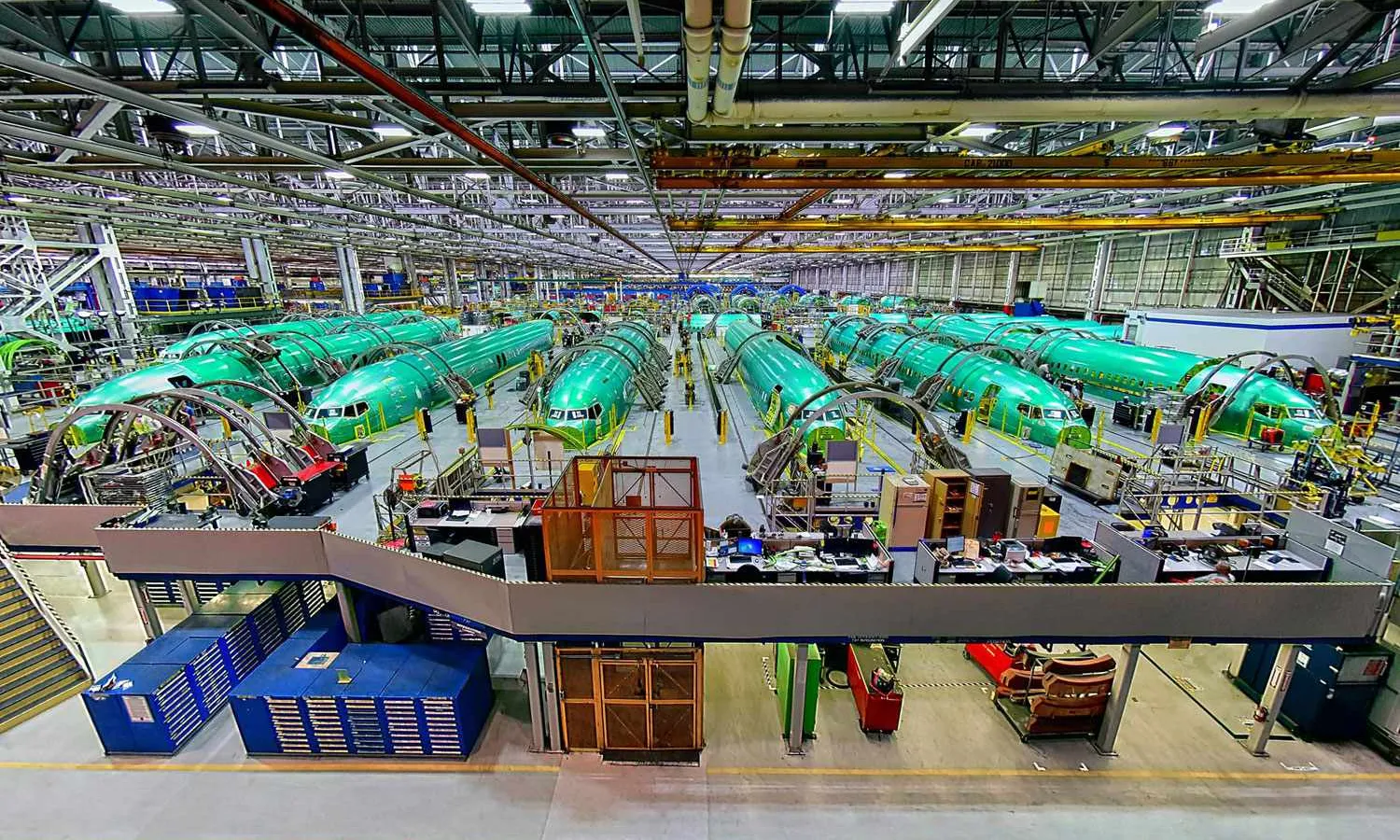
Under the terms of the agreement, Boeing acquires all Spirit operations linked to its commercial aircraft, including fuselage manufacturing for the 737, 767, 777, and 787 programs.
Airbus has taken ownership of Spirit’s industrial assets dedicated to its commercial jet programs and is bringing each site into its global production network. The company now controls the Kinston facility in North Carolina, which produces A350 fuselage sections and will operate as Airbus Aerosystems Kinston.

It has also added the Saint Nazaire site in France, responsible for A350 fuselage work, which will operate as Airbus Atlantic Cadrean. In Casablanca, Morocco, the facility that builds A321 and A220 components will continue its activities under the name Airbus Atlantic Maroc Aero.
Airbus has also taken over A220 wing and mid fuselage production in Belfast, Northern Ireland, now rebranded as Airbus Belfast, along with the Prestwick, Scotland operation that manufactures wing components for the A320 and A350, which will become an affiliate known as Prestwick Aerosystems. In addition, A220 pylon production will be moved out of Wichita, Kansas, and consolidated at the Saint Eloi site in Toulouse, France.
Spirit Defense will operate as an independent subsidiary, maintaining its role as a supplier to the broader defense industry. This separation ensures continuity for defense customers distinct from the commercial aerospace realignment.

Airbus received a compensation payment of $439 million as part of the deal, in addition to price adjustments and settlement of liabilities associated with the transferred assets. The arrangement allows Airbus to manage key supply chain elements for its aircraft while mitigating financial exposure.
Boeing and Airbus moved to take over Spirit AeroSystems after the supplier’s financial slide exposed how dependent both manufacturers had become on its work. The company’s situation created uncertainty around major structures already in production, leaving the two airframers with little choice but to step in and regain control of a link in the chain that had become too fragile to leave on its own.
About the Author

Ricardo Meier
Creator of the website that started in 1996 as a magazine. He also writes on Brazilian websites AUTOO, MOTOO and MetrôCPTM.


