Boeing F-47 to be "world's first 6th generation fighter," says US Air Force
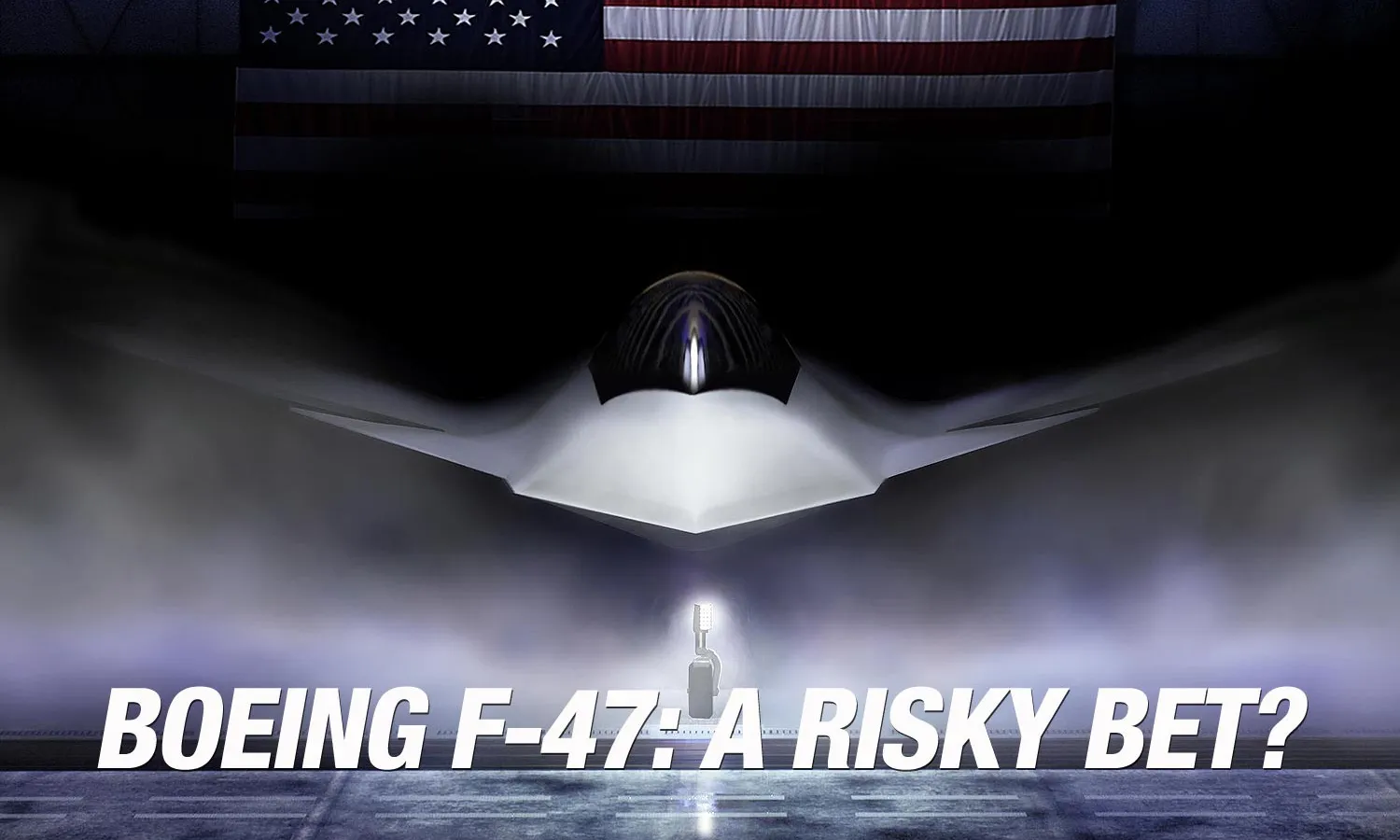
The selection of Boeing to develop and produce the US Air Force’s F-47 fighter has sparked a series of unprecedented developments and raised several questions.
The announcement made by President Donald Trump on March 21 came as a surprise when he selected a company that had not won a bid for the Air Force since the selection of the F-15 Eagle, then a product of McDonnell Douglas, which was acquired in 1997.
It should be noted that the F-22 Raptor, which will be replaced by the F-47, involved Boeing and General Dynamics, but it is a project led by Lockheed Martin.

As a group, Boeing lost the ATF competition with the YF-23 (McDonnell Douglas and Northrop) and also the Joint Strike Fighter competition, when the X-32 was defeated by the X-35.
But it is due to its recent history that the aerospace giant caused skepticism about its victory in the NGAD (Next Generation Air Dominance) program.
All of Boeing’s defense programs have gone through – and continue to go through – problems, be it the KC-46A Pegasus tanker, the T-7A Red Hawk advanced training jet or even the conversion of two 747-8i into the new Air Force One, a contract awarded by Trump in his first term.

The company’s credibility has also been shaken by the embarrassment of the Starliner capsule, which left two NASA astronauts stranded on the International Space Station (ISS) for nine months until they were rescued by a rival SpaceX spacecraft.
Not to mention the years-long crisis with its commercial aircraft line, caused by design and production flaws and even safety omissions.
Boeing will be a newcomer to stealth fighters
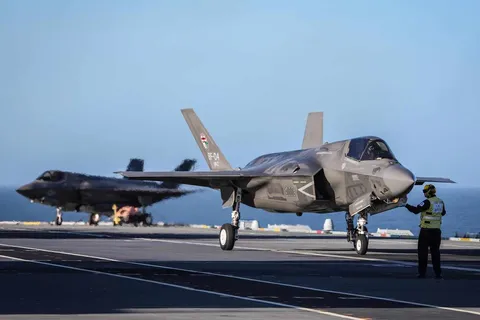
In the face of so many misfortunes, Boeing has remained in the race with Lockheed Martin, the company that supplied the pioneering F-117 and the last two fighters for the USAF.
Along with Northrop Grumman’s B-2 and B-21 bombers, they are the only stealth aircraft contracted by the service.
Boeing, in this sense, is a newcomer, despite having already developed prototypes capable of avoiding detection by radar.

The NGAD program has been managed by the Air Force since at least the last decade and, as we have recently learned, two conceptual X aircraft were put into flight at the time.
One of them was certainly assembled by Boeing, but until 2024 the lessons learned from these projects did not seem to guarantee that the winner would be technologically superior in the face of profound changes in aerial warfare.
The advent of advanced combat drones, equipped with artificial intelligence and much cheaper and smaller, tends to make manned fighters questionable.
“World’s first 6th generation fighter”
It was this uncertainty that made the previous administration rethink the paths of NGAD or even cancel it.
Trump, however, resolved the situation two months after taking office. And his statements and those of the new Chief of Staff of the Air Force, General David W. Allvin, went in another direction.

The F-47 will be the “world’s first 6th generation fighter,” Allvin claimed, discrediting his adversaries, in this case China, which flew two stealth prototypes late last year.
The general also promised that the new fighter will be cheaper, more numerous, more available and more up-to-date than any other combat aircraft.
This is, therefore, placing a huge responsibility on Boeing, which is still picking up the pieces from years of losses.
Since this is a highly secretive program, it is not possible to know the values, deadlines and, above all, the reasons that led to Boeing’s choice over Lockheed Martin.

Help from the White House?
The Maryland-based defense company has been the biggest loser in recent months when it was sidelined from another sixth-generation fighter jet competition, the F/A-XX, for the US Navy.
In addition, the F-35 has been the target of criticism from Elon Musk, the controversial billionaire who supports Trump and has taken on the mission of ending bureaucracy in the government.
The stealth jet is now also suffering the repercussions of the president’s actions against allies such as Canada and the European Union, causing governments to rethink their dependence on Lockheed’s aircraft.

In any case, granting the NGAD to Boeing is an invaluable help to the company’s self-esteem, in line with Trump’s election slogan of restoring US industrial capacity.
However, it is worth asking what will happen if the F-47 goes through the same situations as other Boeing-led programs that are much simpler than it.
With China increasingly powerful and technologically advanced, any delay could make the U.S. Air Force more vulnerable and obsolete.
The first challenge for Boeing has already been set: to get the F-47 flying by 2028, before Trump leaves the White House.
About the Author

Ricardo Meier
Creator of the website that started in 1996 as a magazine. He also writes on Brazilian websites AUTOO, MOTOO and MetrôCPTM.