Boeing says it has 90 F-15EX fighters in production
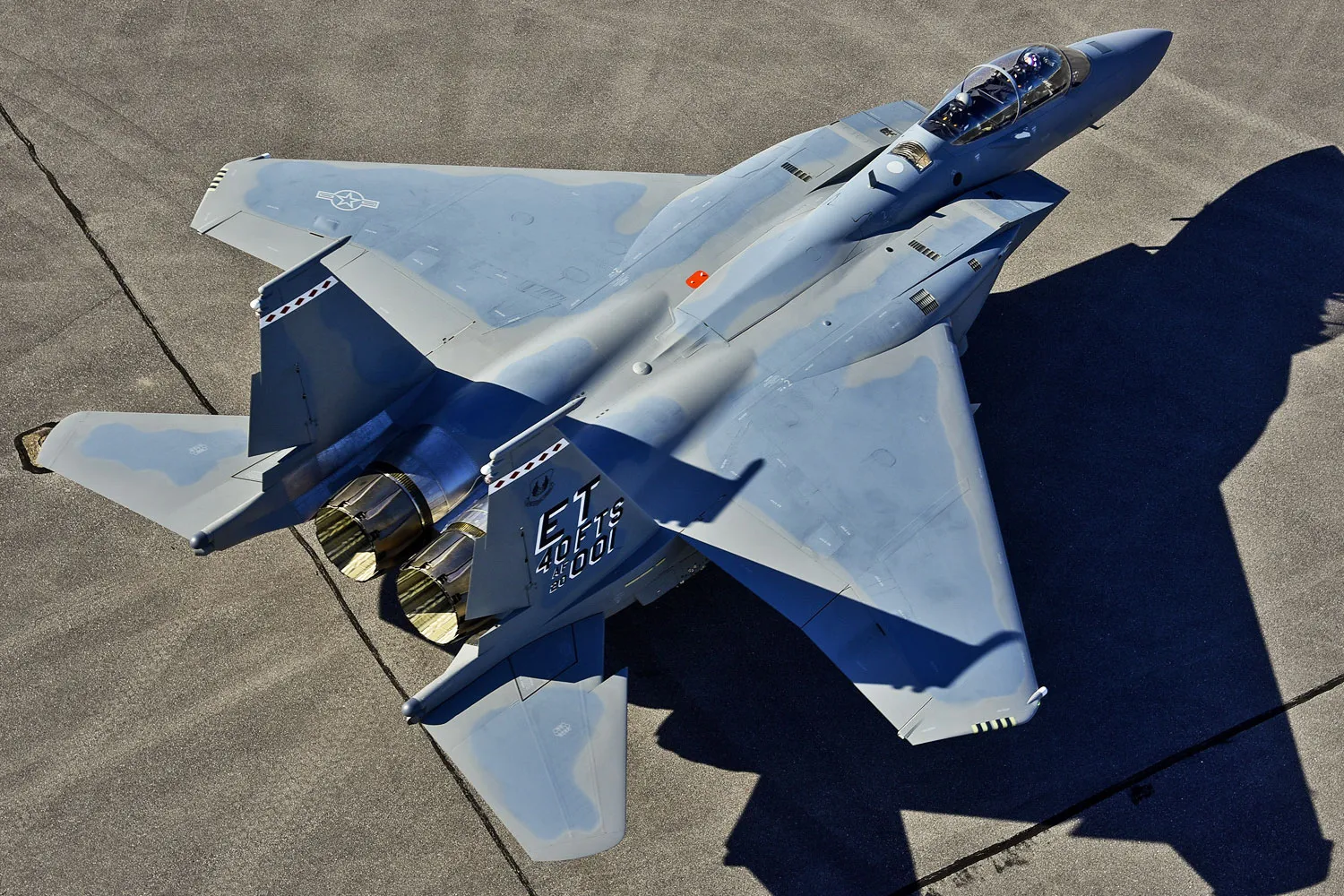
An updated and repowered variant of the F-15, the F-15EX Eagle II fighter, is in accelerated production by Boeing.
The company said it currently has 90 supersonic jets in various stages of production at its St. Louis, Missouri, facility.
Boeing aims to reach a monthly production rate of two F-15EXs starting in late 2026. The U.S. Air Force has orders for 98 aircraft, although it plans to increase that total.
The Air National Guard recently received the first Eagle IIs from the second production batch, with 12 aircraft expected. The first batch had eight jets completed.

“Factory performance has been improving in recent months, with rework and traveled work rates decreasing month over month, enhancing workflow productivity and supporting factory stabilization,” Tom Altamuro, Boeing’s director of manufacturing and safety for the F-15, told BNN.
According to the company, a strategy known as “Cut the CoRRS” was implemented, which focuses on minimizing rework and maximizing quality.
4.5th Generation Fighter
Early in the early 1970s, the F-15 was for many years the U.S. Air Force’s air superiority fighter until the arrival of the 5th generation F-22 Raptor.
Despite this, the Eagle continued to assume important roles, but its rapid obsolescence and the need for more fighters to fill the gap of retired aircraft led the USAF to seek a faster and more affordable solution.

Considered a 4.5 generation fighter, the F-15EX has an estimated useful life of 20,000 flight hours, more than double that of the F-15E, which is around 8,000 hours.
The cockpit has received a new digital panel with a large area display (LAD), which is more intuitive and modern. The changes also include the AN/APG-82(V)1 AESA radar, which is more powerful and precise than the model used in the F-15E, and an AN/ALQ-250 EPAWSS electronic countermeasures package.
Boeing also designed the avionics with an open architecture, to facilitate the rapid integration of new weapons and sensors.

The Eagle II is also much more capable in terms of weapons, with up to 12 hardpoints for air-to-air missiles, with the future possibility of integrating the AIM-260 JATM, in addition to a greater total payload.
An interesting fact about the fighter is that, although it is a two-seater, it can perform missions with only the pilot.
About the Author

Ricardo Meier
Creator of the website that started in 1996 as a magazine. He also writes on Brazilian websites AUTOO, MOTOO and MetrôCPTM.