 Uncategorized
Boeing Promotes T-7A Red Hawk for UK Advanced Jet Trainer Requirement
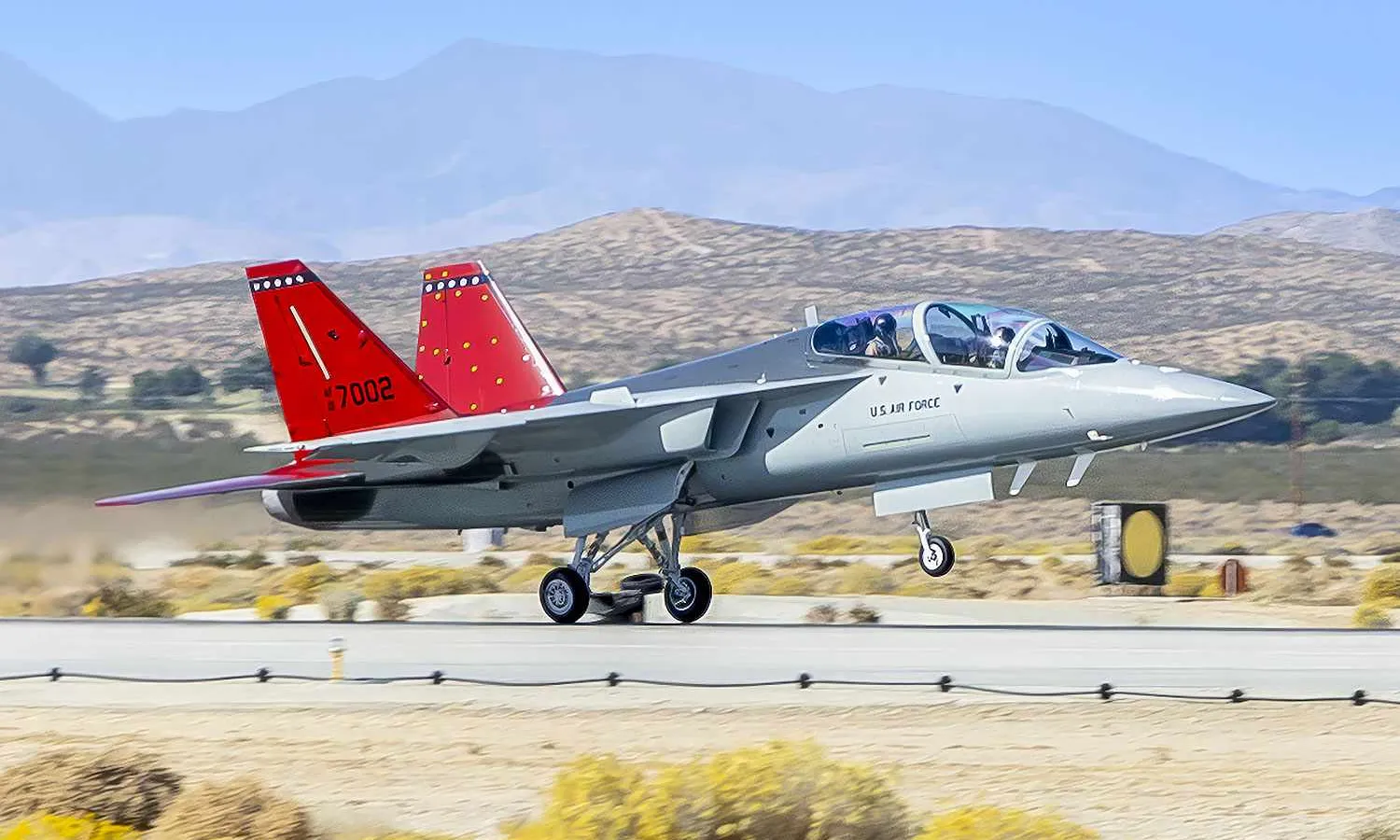
Boeing has begun promoting its T-7A Red Hawk as a candidate to equip the Royal Air Force (RAF) with new advanced jet trainers, according to Flight Global. The initiative comes as the UK prepares to replace its fleet of Hawk T2 aircraft and the remaining Hawk T1s used by the Red Arrows display team.
The UK Ministry of Defence briefly referenced the need to replace the Hawks in a recent defense report. A formal competition for the acquisition is expected to launch in 2026, with a project team already established to begin preparations.
The Red Arrows’ Hawk T1 aircraft date from the late 1970s and must be replaced by 2030 to maintain operational capability. The RAF currently operates 28 Hawk T2s, which are also due for replacement.
Boeing’s T-7A is in an advanced stage of development and testing, with production already underway for the US Air Force. Boeing has delivered five engineering and manufacturing development assets to support testing and evaluation.

The US Air Force plans to ramp up T-7A production following a Milestone C decision in 2026. This timeline aligns with the UK’s expected procurement process.
Boeing and Saab, which are jointly developing the T-7A, have entered early discussions with BAE Systems regarding a potential collaboration for the UK requirement.
Initial negotiations with the UK government are underway to propose the T-7A as a replacement for the RAF's fast trainer jets, but other competitors are expected to participate in any eventual competition.
The advanced trainer jet market currently includes aircraft such as the KAI T-50, the TAI Hürjet, and the Leonardo M-346, among others.
About the Author

Ricardo Meier
Creator of the website that started in 1996 as a magazine. He also writes on Brazilian websites AUTOO, MOTOO and MetrôCPTM.