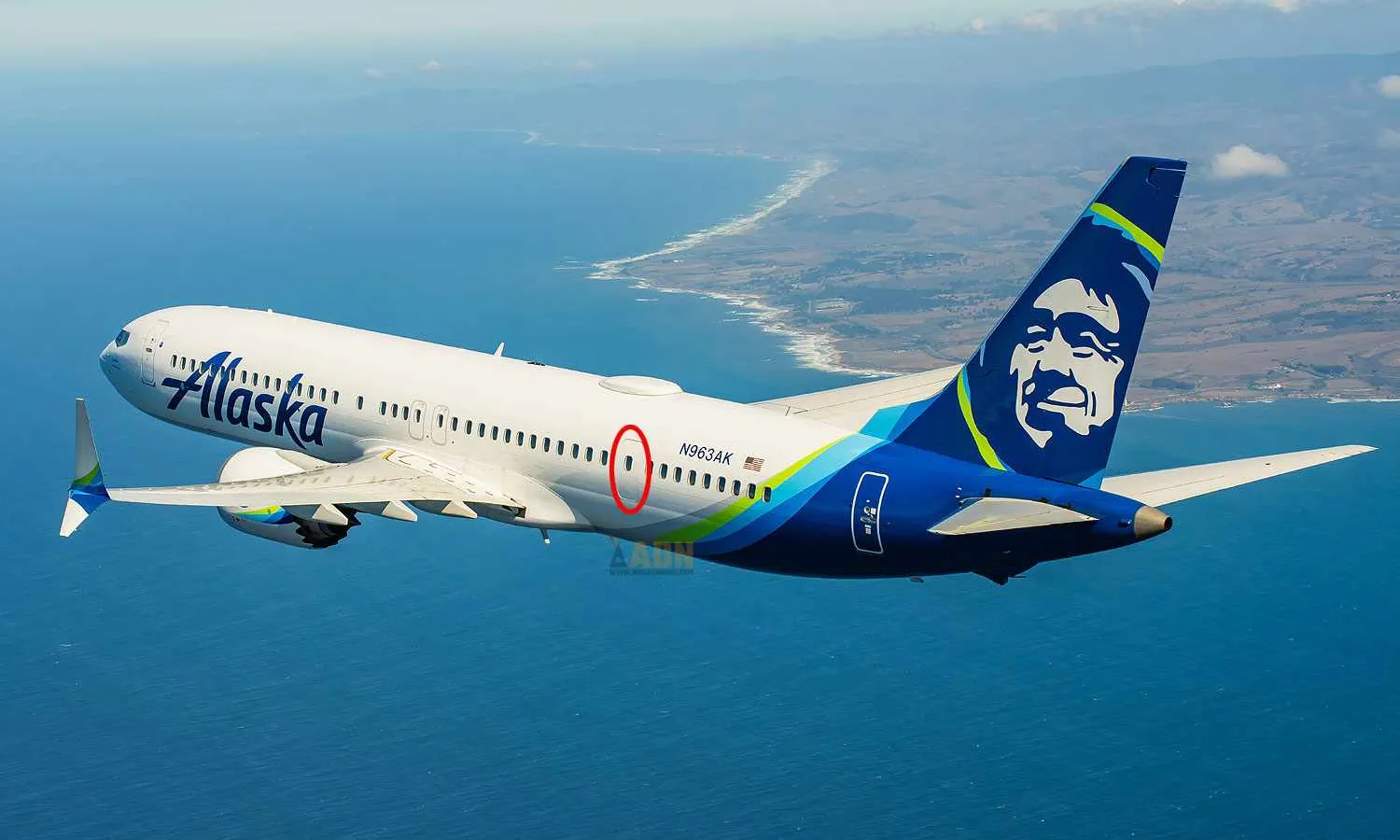
Boeing to change 737 door plug design after failing to determine how bolts were left on Alaska Air plane
The National Transportation Safety Board (NTSB) said Tuesday that neither it nor Boeing could determine how the four bolts that kept the door plug of an Alaska Air 737 MAX 9 attached to the fuselage were left loose.
The aircraft, registration N704AL, was en route from Portland to Ontario, California, on Jan. 5 when shortly after takeoff the so-called “MED” (Mid Exit Door) blew out in mid-flight.
Despite the depressurization, no passengers or crew were injured and the part fell to the ground without hitting anyone.

After initial investigations, it was discovered that the door plug manufactured by Spirit AeroSystems had been removed at Boeing’s Renton plant so that structural repairs could be made.
During reassembly, the four bolts were not reassembled, but Boeing did not record the activities. The NTSB analyzed data from other similar processes, but also did not reach any conclusions.
NTSB Chairwoman Jennifer Homendy said that interviews with employees revealed that “there’s not a lot of trust, there’s a lot of distrust within the workforce.”
Changes to door plug design
Boeing senior vice president of quality Elizabeth Lund said the company has started placing a bright blue and yellow sign on the door plug that says “Do Not Open” when fuselages arrive at Renton.

Lund also revealed that the planemaker is making changes to the door plug design to ensure that it is always secured.
The company expects to complete the project within a year and then retrofit its fleet of aircraft with the new safety mechanism.
It is unclear, however, whether the change will occur only on the 737 MAX 9 or also on the 737-900 NG series, which shares the same configuration.
About the Author

Ricardo Meier
Creator of the website that started in 1996 as a magazine. He also writes on Brazilian websites AUTOO, MOTOO and MetrôCPTM.


