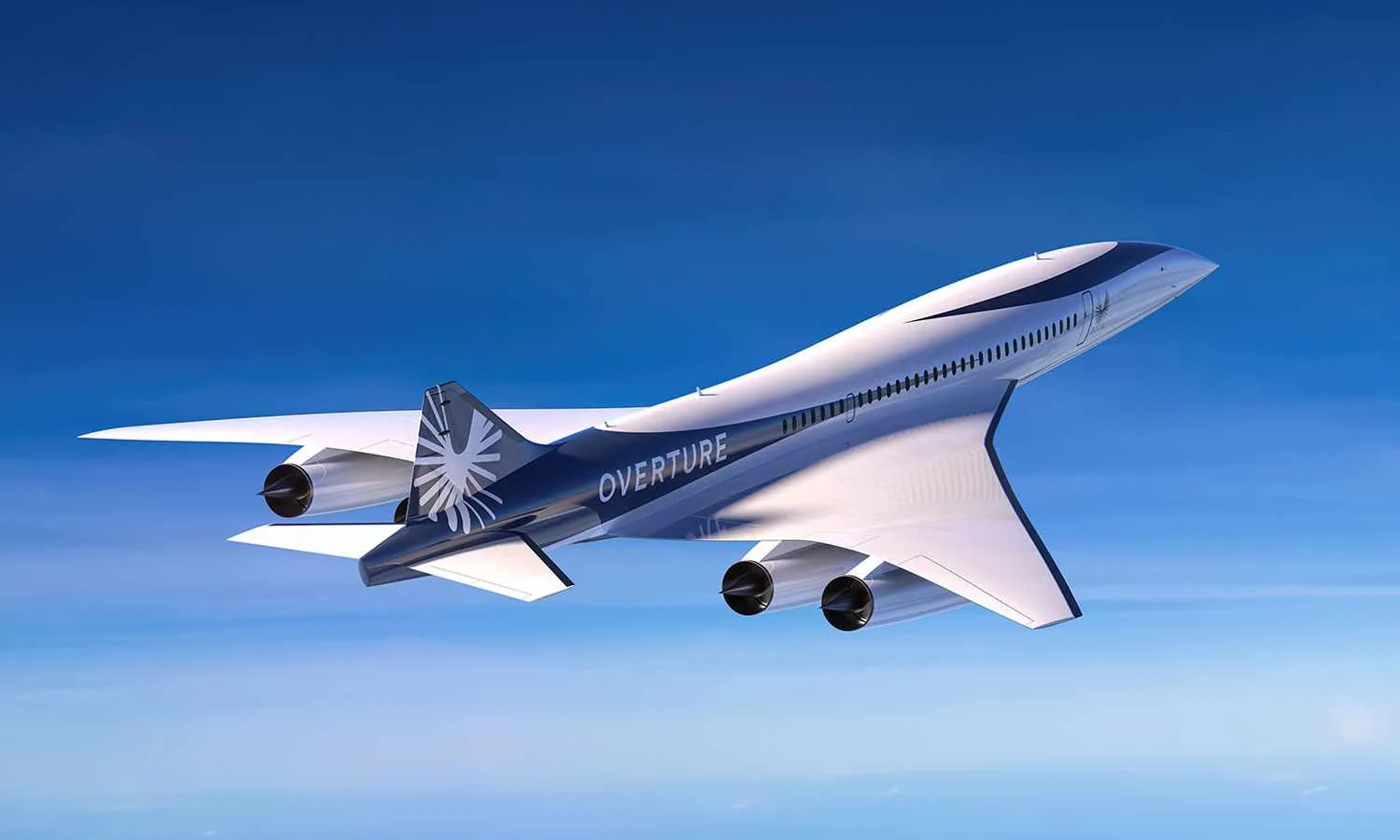
Boom aircraft advances spark US bill in favor of civilian supersonic flights
Recently, the startup Boom Supersonic made the first supersonic flight without producing an audible sonic boom with the XB-1 demonstrator, which took place in February.
It was another step in the development of the Overture, a supersonic airliner for 80 passengers capable of flying at Mach 1.7.
However, the company is still prohibited from flying at supersonic speeds over US territory, still reminiscent of the Concorde era. But a bill wants to change that.
Authored by Republican Senator Ted Budd of North Carolina, the so-called Supersonic Aviation Modernization Act (SAM) proposes to allow supersonic flights without an audible boom over the United States.

As justification, Budd claims a supposed “race against China” in civil supersonic flights to authorize such flights and accelerate the development of technology so that the country can lead the “next era of aviation”.
However, China does not have a commercial aircraft industry focused on civil supersonic flight, despite the study of the Comac C949, unlike Boom Supersonic’s proposal with its intended Overture jet.
Megafactory in Greensboro
The issue here would not be a technological race, but the generation of jobs, since Boom announced that its megafactory for the production of the Overture will be in Greensboro, North Carolina.

There, the company promises to generate 1,750 jobs and Budd, elected in this region, wants to ensure that this will happen, even if the gap between the XB-1 and the Overture is still large.
As is known, the XB-1 is one-third the size of the Overture and the Mach cut effect, a physical phenomenon where sound waves are refracted in the atmosphere, makes the sonic boom inaudible on the ground at high altitudes and at a maximum speed of Mach 1.3.
Still, it is not known whether this phenomenon will actually occur in the Overture when it is in real flight conditions.

Budd’s proposal talks about ensuring faster air travel in the United States, but it still seems too early to allow civilian supersonic flights, without prior authorization, to occur there.
In the United States, Boom has a huge interest in this, since it has orders for 35 aircraft made by American Airlines and United Airlines, with an option for another 75 planes.
If the Overture can fly supersonic without an audible boom on the ground, Budd’s law will have been more than valid. The project will still have to go through several committees before being voted on and, eventually, approved.

If approved, the Federal Aviation Administration (FAA) will have 12 months to revise federal regulations to allow supersonic flights without special authorization.
With the Overture, Boom aims to make domestic coast-to-coast flights in significantly less time than subsonic jets. That means going from New York to Los Angeles in 4 hours instead of the current 5 hours and 30 minutes.
About the Author