 Air Transport
Breeze Airways plans fleet expansion to 400 aircraft
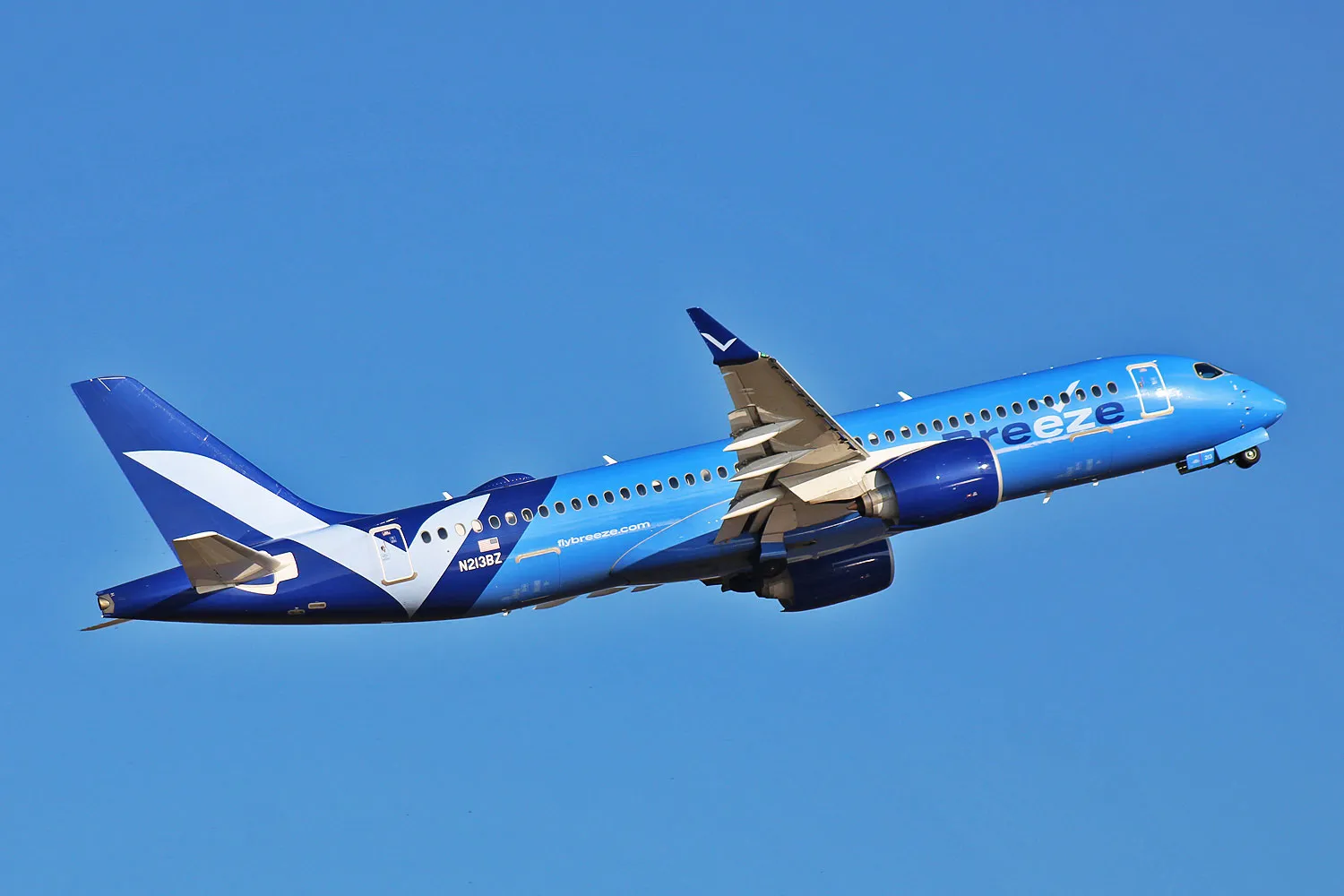
Breeze Airways is aiming to expand its fleet to 400 aircraft, with a significant focus on the Airbus A220 family, as the carrier continues to pursue underserved markets in the United States. The strategy was outlined by founder David Neeleman during an interview on the Bloomberg Talks podcast.
Currently, Breeze operates a fleet of about 56 aircraft, comprised of eight Embraer E190 jets and 48 Airbus A220s. Of the A220s, six are temporarily out of service due to engine issues, highlighting ongoing technical challenges within the industry.
Neeleman stated that the company has a firm order for 90 additional A220s and holds options for up to 120 more. The potential introduction of the A220-500 variant is seen as essential for enabling the projected fleet growth, though Airbus must first ensure the model’s profitability before launch.

The airline’s business model centers on serving routes with little or no direct competition, with 70% of its network currently operating without rival carriers. This approach has allowed Breeze to expand its footprint, while avoiding overlap with major U.S. airlines such as American, Delta, and United.
Breeze’s network strategy also draws a distinction from carriers like Spirit Airlines, which Neeleman noted faced operational challenges when deploying larger aircraft on certain routes. As a result, Breeze has no current interest in adding larger models such as the A320neo to its fleet, citing the increased complexity such a move would entail.
According to Neeleman, the passenger experience and onboard comfort provided by the A220 are contributing factors in the airline’s value proposition.
About the Author

Ricardo Meier
Creator of the website that started in 1996 as a magazine. He also writes on Brazilian websites AUTOO, MOTOO and MetrôCPTM.


