China may deploy J-36 stealth fighter on aircraft carriers
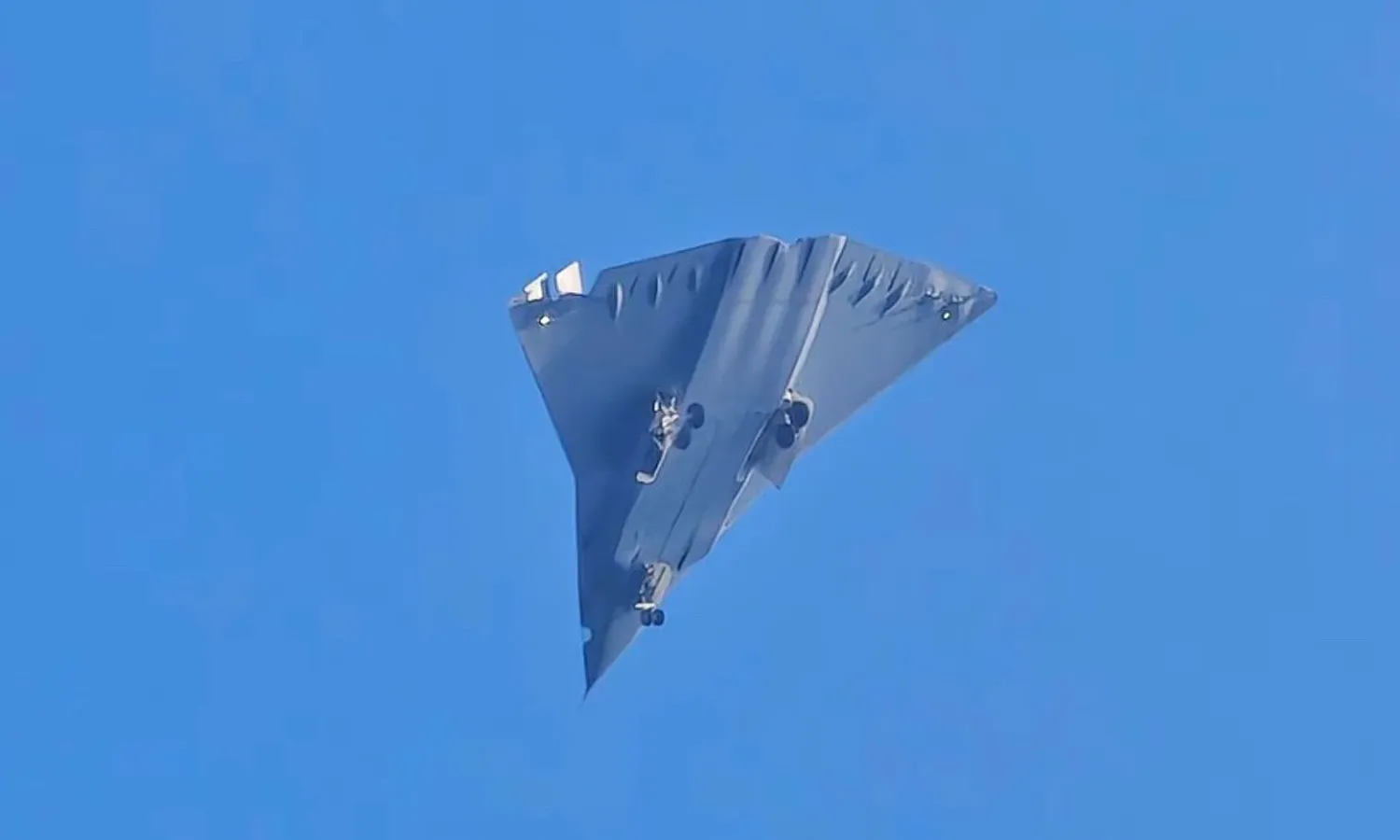
The Chengdu ‘J-36’ stealth fighter has been followed with amazement with its increasingly surprising appearances and China has certainly caused concern in the West, especially the US government.
A recent publication in the scientific journal Acta Aeronautica et Astronautica Sinica, known as China’s leading aviation journal, discussed a project under development to make it possible to land the huge three-engine stealth aircraft on aircraft carriers.
The new technology is being developed by the AVIC Chengdu Aircraft Design and Research Institute and the Nanjing University of Aeronautics and Astronautics.

Without vertical tail fin or tail fin, the J-36 would be a less accurate jet on landing, which is a major problem in operations on aircraft carriers.
The article, published by the South China Morning Post (SCMP), states that the technology would help overcome the “ship’s wake effect,” the turbulent airflow generated by the ship in motion, causing instability during approach.

How does it work?
To solve this issue, the technology would consist of “direct force control,” which would adjust the jet’s flight path using the J-36’s three engines.
This would allow real-time lift control without changing the aircraft’s pitch, using Jacobian matrices to calculate all flight parameters using the Fixed Time Disturbance Observer (FTDO).
The module, adapted from robotics, detects and neutralizes the effects of crosswinds between control surfaces, compensating for oscillations even in seas with waves of up to 6 meters.
China has reportedly carried out multiple simulated landings under extreme conditions, including crosswinds, turbulent air wakes, and dynamic deck movements.

In the tests, the simulated landing occurred with the arrestor hook attached to the second and third cables. The minimum altitude error was only 2 centimeters.
In the “naval” J-36, it is known that 3D thrust vectoring rudders and aerodynamic drag were introduced, as well as deflectors in the spoiler slots that control the airflow over the aircraft’s tail.
If this technology actually works in real life, China could deploy the J-36 anywhere in the world and with long-range strategic strike capabilities, which could greatly concern the US.
About the Author