 Air Transport
COMAC fails to increase C919 deliveries in 2025
Despite ambitious plans, COMAC has not been able to produce its new C919 airliner as intended. At least not until the first half of the year.
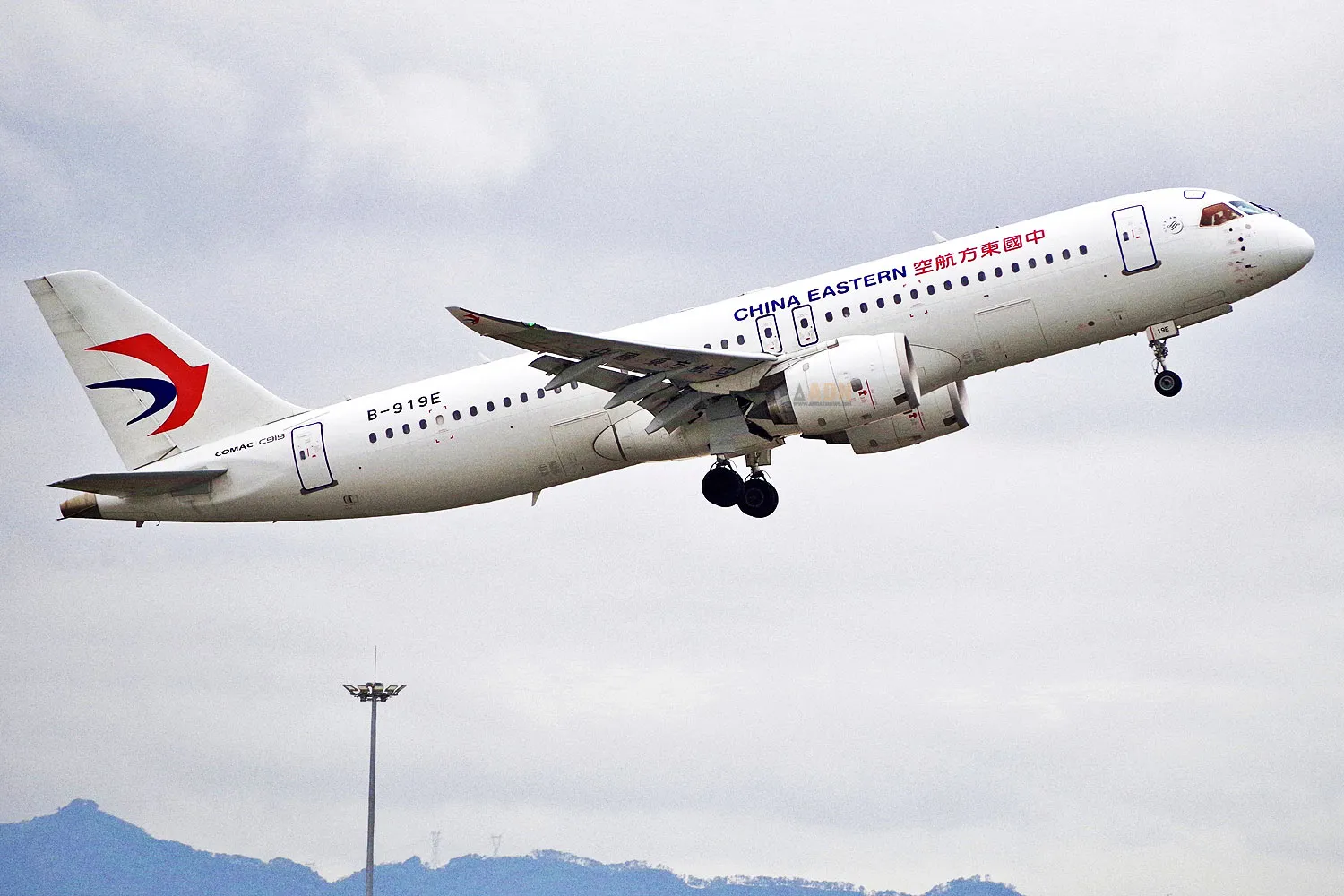
The Chinese planemaker has delivered only five aircraft of the model, the most advanced ever developed in the country and which competes in the category of the Boeing 737 and the Airbus A320.
The most recent delivery took place on Friday to China Eastern Airlines, its launch customer.
The Shanghai-based carrier now has eleven C919s out of the 20 delivered to the three major Chinese carriers – China Southern Airlines has five jets and Air China another four planes.

There is also one C919 passed on to ‘COMAC Express’ and used for demonstrations. The aircraft was scheduled for delivery to Suparna Airlines, but for unknown reasons it ended up not being delivered.
Components from the US suspended by Trump
In March, COMAC updated its commercial aircraft production target for 2025, establishing a plan to complete 75 jets, 50 of which are C919s.
The ramp-up is driven by a firm order book that exceeds 300 aircraft, just counting the orders from the three large state-owned companies. The manufacturer, however, claims to have more than a thousand orders from several other customers.

The difference between the plan and reality, however, suggests that COMAC may experience difficulties with its supply chain.
A large part of its suppliers are Western, as in the case of the Leap-1C engine, manufactured by CFM (a joint venture between GE and Safran). It is known that the production of these turbofans is behind schedule since it also powers the 737 and the A320neo.
Perhaps more concerning for the Chinese is the Trump administration’s recent suspension of exports of U.S. components.
While the details are not public, reports say GE is banned from shipping CF34 (C909) and Leap-1C engines to China, as are companies such as Honeywell and Collins (RTX), among others.

According to the Commerce Department, some items considered strategic are undergoing export review.
In 2024, COMAC delivered 13 C919s, and ten of them went to customers in the second half of the year, suggesting that the state-owned company could make up ground in the coming months. But completing five dozen aircraft seems a tall order today.
About the Author

Ricardo Meier
Creator of the website that started in 1996 as a magazine. He also writes on Brazilian websites AUTOO, MOTOO and MetrôCPTM.


