Egypt signals interest in Chinese J-35A stealth fighter
During the “Eagle of Civilization 2025” joint air exercise held in April at Wadi Abu Rish Air Base, a senior Egyptian Air Force commander expressed interest in the Chinese J-35A stealth fighter, which is reportedly in the early stages of serial production.
According to North African defense sources, Lieutenant General Mahmoud Fuad Abdel Gawad showed strong interest in the fifth-generation aircraft and expressed a desire to visit China to evaluate the platform firsthand.
Although no official procurement talks have been confirmed, the comments signal closer military engagement between Egypt and China, underscored by the presence of advanced Chinese aircraft in the exercise, including the J-10C multirole fighter, YU-20 aerial refueling tanker, and the KJ-500 AEW&C, the latter making its first deployment abroad for a joint drill.

The Egyptian interest in the J-35A coincides with reports of a possible acquisition of up to 40 J-10CE fighters, the export variant of the J-10C. Both aircraft are part of China’s broader push to expand its defense exports in the Middle East and offer alternatives to Western platforms, especially where geopolitical constraints apply.
Egypt has a somewhat seesawing relationship with the West and Russia, operating US fighters such as the F-16 and the French D-Assault Rafale and Mirage 2000, but also has three dozen MiG-29s.
Years ago, the air force ordered the Sukhoi Su-35, but terminated the contract before the aircraft, already manufactured, were delivered. Part of the fleet is said to have been sent to Algeria.

China’s second stealth fighter enters spotlight
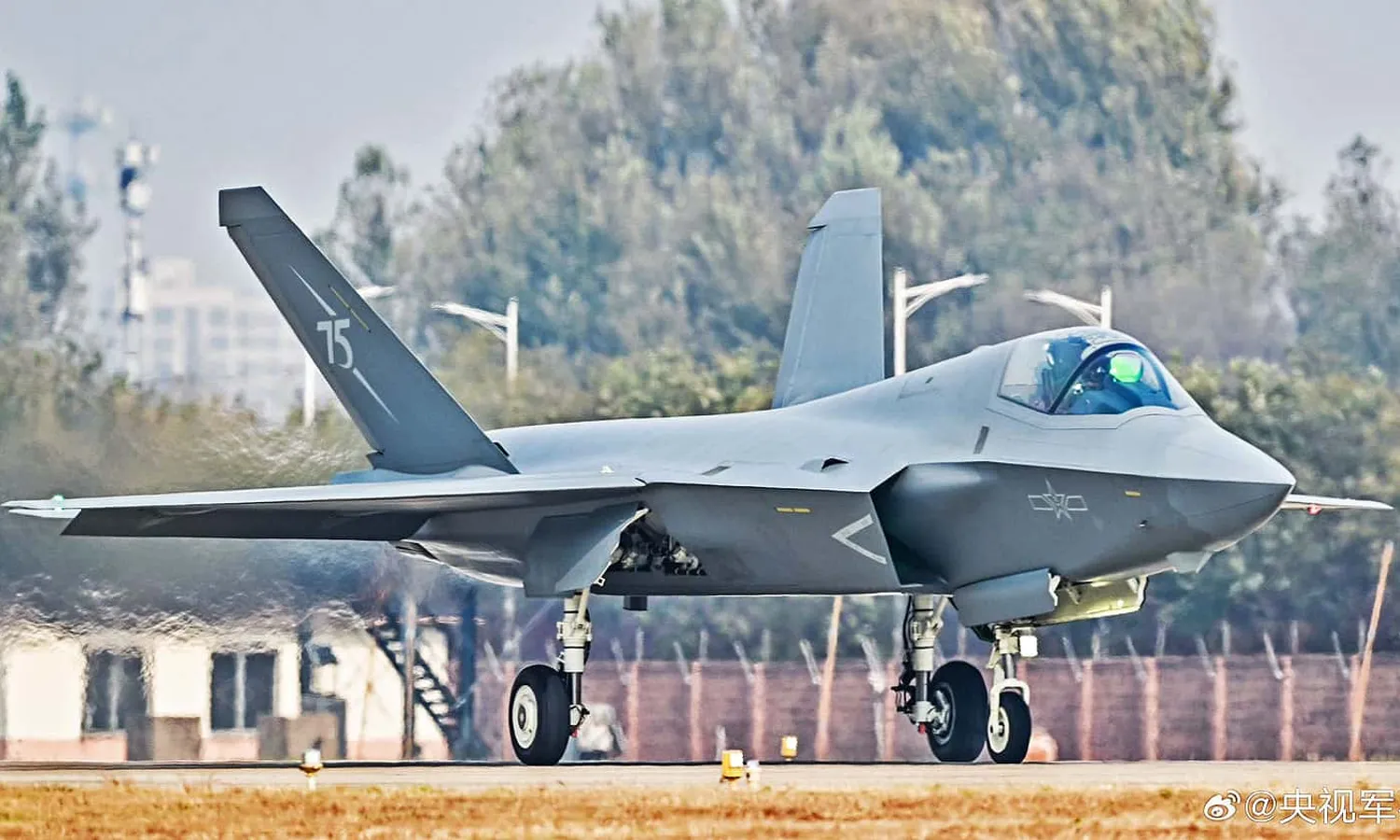
Developed by Shenyang Aircraft Corporation (SAC), the J-35A is China’s second fifth-generation fighter after the J-20. Twin-engined and built for stealth and network-centric warfare, the aircraft features advanced digital avionics, internal weapons bays, sensor fusion, and a low observable airframe designed for operations in contested airspace. A carrier-based version is also under development for China’s Type 003 “Fujian” aircraft carrier.
Recent photos circulating on Chinese social media show what is believed to be a green-primed production model of the J-35A, fueling speculation about its production readiness. However, there is still no evidence that the aircraft is close to entering service or has any export agreements.

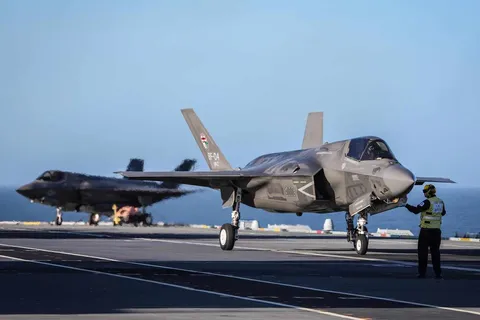
The J-35A uses a combination of AESA radar, distributed IR/optical sensors, and long-range missiles like the PL-17, offering a capability profile that rivals the F-35.
If Egypt eventually opts for the J-35A, it would represent a significant geopolitical and technological shift in its airpower strategy, reflecting the broader trend of Middle Eastern nations diversifying their defense partnerships beyond traditional Western suppliers.
About the Author

Ricardo Meier
Creator of the website that started in 1996 as a magazine. He also writes on Brazilian websites AUTOO, MOTOO and MetrôCPTM.