 Defense
FCAS: Germany pushes back as France seeks 80% share in 6th generation fighter program
German Chancellor Friedrich Merz said on Wednesday that France and Germany must adhere to their previous agreements on the configuration of the Future Combat Air System (FCAS), the ambitious joint program to build Europe’s sixth-generation fighter jet.
His remarks came after reports revealed France’s intention to claim 80% of the program’s workshare, which could derail the delicate partnership.
“I am absolutely determined that we stick to the agreements we’ve made with France and Spain regarding FCAS,” Merz told a press conference alongside NATO Secretary General Mark Rutte.
While he acknowledged that differences remain over the consortium’s composition, Merz expressed confidence in reaching a solution.

The project, led by Dassault Aviation (France), Airbus (Germany), and Indra (Spain), aims to replace the Rafale and Eurofighter fleets by 2040.
Industry sources confirmed that France’s push for an 80% stake could dismantle the current workshare agreement. If enforced, the demand may prevent the program from advancing to its next phase as planned by the end of this year, adding yet another setback to a project already hampered by delays and disputes over intellectual property.
FCAS
The Future Combat Air System (FCAS) is an European military program officially launched in 2017 by France and Germany, with Spain joining as a partner in 2019.
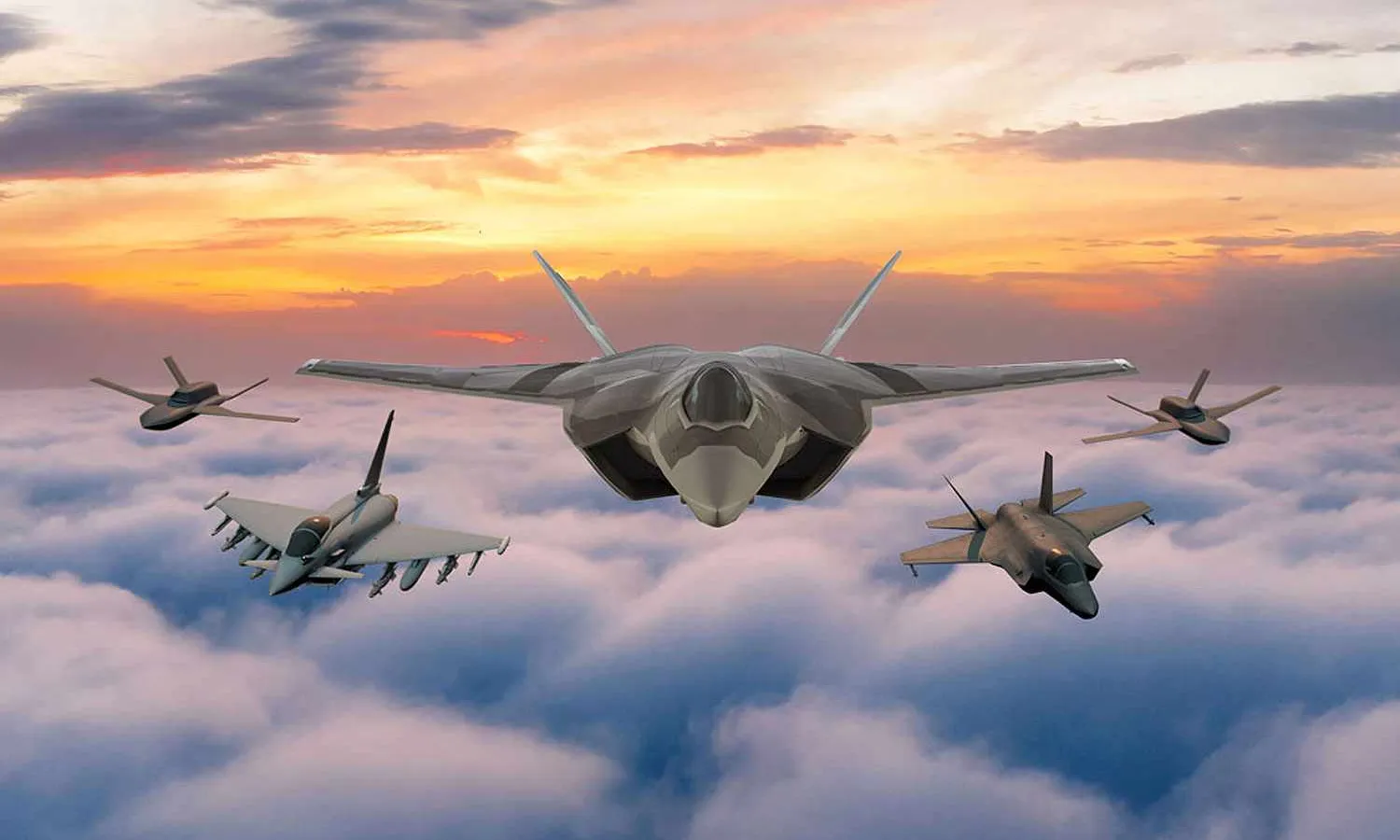
More than just the development of a 6th-generation fighter jet to replace current Rafale, Eurofighter, and Typhoon aircraft by 2040, FCAS envisions a complete air combat ecosystem. This includes manned fighter jets, swarms of drones known as Remote Carriers, advanced combat cloud systems, and artificial intelligence to manage real-time battlefield operations.
The program’s core aim is to ensure Europe’s strategic defense autonomy in the face of growing global military powers like the United States, China, and Russia.

FCAS faces direct competition from the Global Combat Air Programme (GCAP), a rival project led by the United Kingdom, Italy, and Japan, which also seeks to develop a next-generation fighter, known as the Tempest, along with integrated advanced air combat systems.
While FCAS represents the continental European approach to future airpower, GCAP reflects a transcontinental alliance combining Western and Asian technological strengths. Both programs are racing not only to secure military superiority but also to capture future export markets in the global defense industry.
About the Author

Ricardo Meier
Creator of the website that started in 1996 as a magazine. He also writes on Brazilian websites AUTOO, MOTOO and MetrôCPTM.