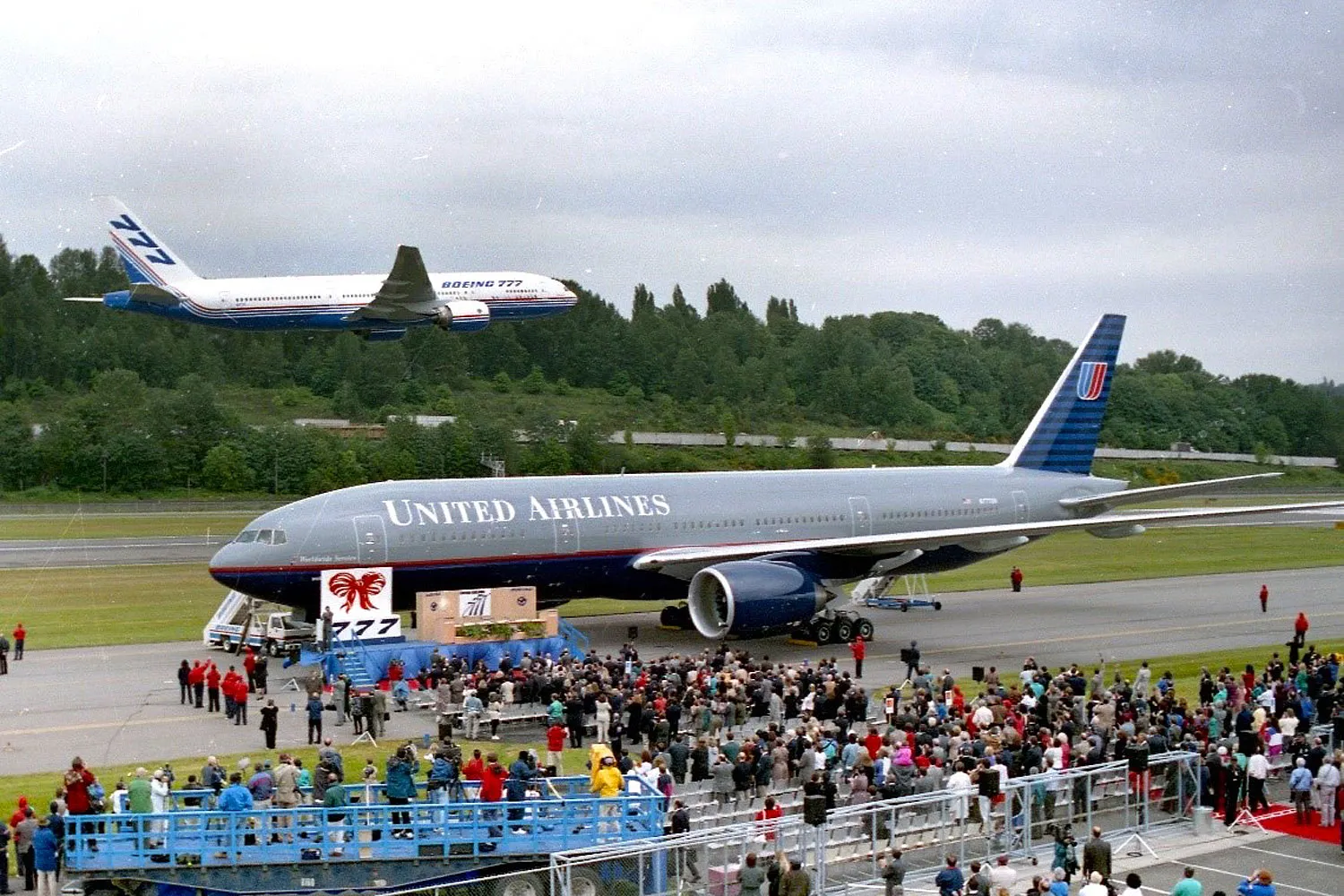
First Boeing 777 delivered in the world completes 30 years
On May 15, 1995, United Airlines became the launch customer of the Boeing 777, receiving the first-ever production aircraft of the now-iconic widebody twinjet.
Registered N777UA, the aircraft marked a historic milestone for both the airline and Boeing, as it ushered in a new generation of long-haul aviation.
The Boeing 777-200 was the first commercial aircraft designed entirely using 3D computer-aided design and in close collaboration with several global airlines. United was a key partner in the program from the start, shaping specifications to match the airline’s needs for range, efficiency, and capacity.
The aircraft was powered by Pratt & Whitney PW4084 engines and became the first airliner to receive ETOPS-180 certification from the FAA on May 30, 1995, allowing it to operate up to 180 minutes from the nearest alternate airport on a single engine.

The widebody entered commercial service on June 7, 1995, operating a flight from London Heathrow to Washington Dulles. Its combination of advanced aerodynamics, large capacity (up to 400 passengers), and long range made it an instant favorite among airlines seeking to replace aging four-engine aircraft like the 747 and DC-10.
6 million flights
To date, Boeing has received more than 2,100 orders for the 777 family, making it the most successful widebody program in the manufacturer’s history.
The first 777 ever delivered remains in active service with United Airlines in 364-seat two-classes configuration.

According to the planemaker, the 777 fleet has already completed 6 million flights, having flown 49 billion miles and carried around 4 billion passengers.
Since that first delivery, the Boeing 777 family has grown significantly. Key milestones include:
- 1997: Introduction of the 777-200ER with extended range.
- 2004: Entry into service of the 777-300ER, the most popular variant, with over 850 units delivered.
- 2009: Launch of the 777 Freighter (777F).
- 2013: Boeing announces the 777X program, featuring folding wingtips, GE9X engines, and a new-generation cabin.
- 2026 (expected): Entry into service of the 777-9, the largest and most advanced 777 model to date.
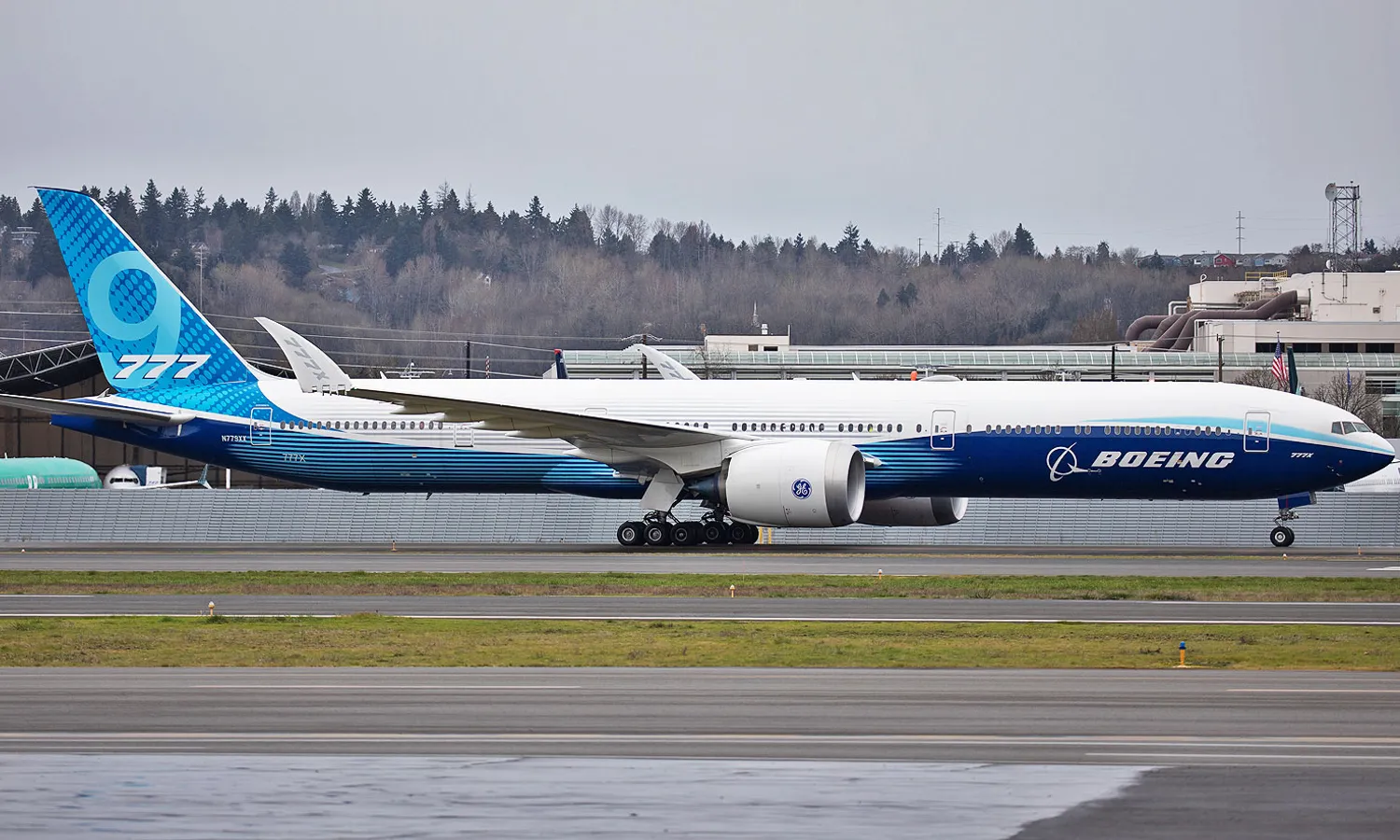
Boeing 777-9 N779XX (Michael Steffen)

About the Author

Ricardo Meier
Creator of the website that started in 1996 as a magazine. He also writes on Brazilian websites AUTOO, MOTOO and MetrôCPTM.


