 Air Transport
Future airliners may look more like stealth bombers, says Airbus CEO
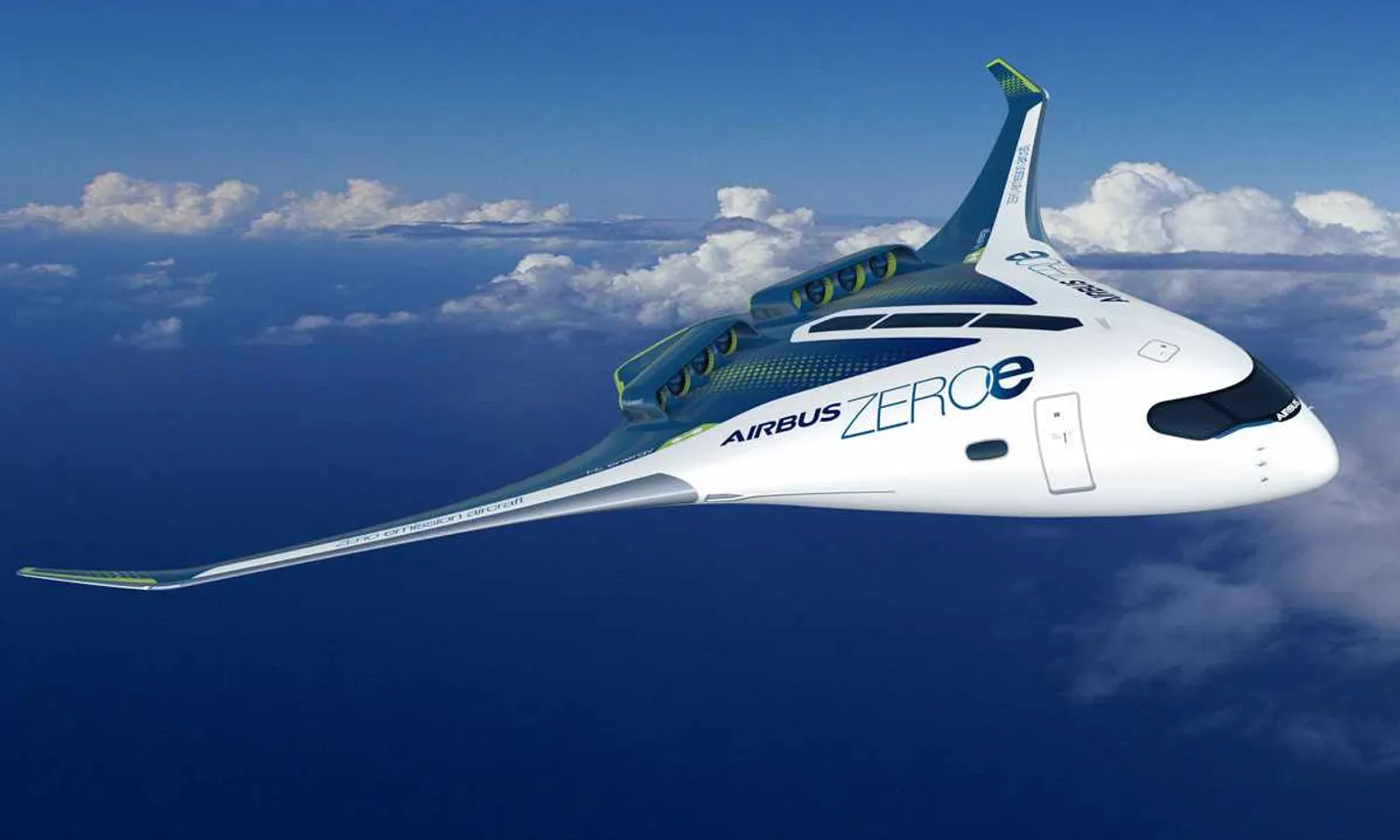
Airbus is considering a major shift in commercial aircraft design. CEO Guillaume Faury told Bild that future jets may resemble stealth bombers like the B-2 Spirit as the company advances its studies on blended-wing body (BWB) aircraft.
Faury says the integrated wing-and-fuselage layout could deliver higher aerodynamic efficiency, lower fuel burn, and reduced emissions, especially on long-haul flights. Widebody aircraft are the most suitable for the concept, he noted.
Airbus has been studying BWB technology since 2017 under its ZEROe program, which explores new structures and propulsion systems for cleaner aviation. A subscale prototype flown in 2019 showed fuel savings of about 20%.

The company is also evaluating hydrogen propulsion for future BWB models, though it has pushed back its original 2035 service-entry target by up to ten years due to certification challenges and a lack of supporting infrastructure.
Competition in the field is growing. U.S. startup JetZero is targeting wide-body operators with its Z4 concept. Its Pathfinder demonstrator completed a successful flight in 2024, and the company secured a U.S. Air Force contract to fund a full-scale prototype.
The BWB concept dates back to NASA studies on lifting bodies in the 1960s that helped shape the Space Shuttle. By merging the wing and fuselage into a single wide surface, the design improves aerodynamic efficiency and interior volume.
Mounting engines on the upper surface also allows the use of larger-diameter turbofans, which are harder to fit under conventional wings.

About the Author

Ricardo Meier
Creator of the website that started in 1996 as a magazine. He also writes on Brazilian websites AUTOO, MOTOO and MetrôCPTM.


