General Atomics Releases First Image of YFQ-42A Unmanned Fighter Jet
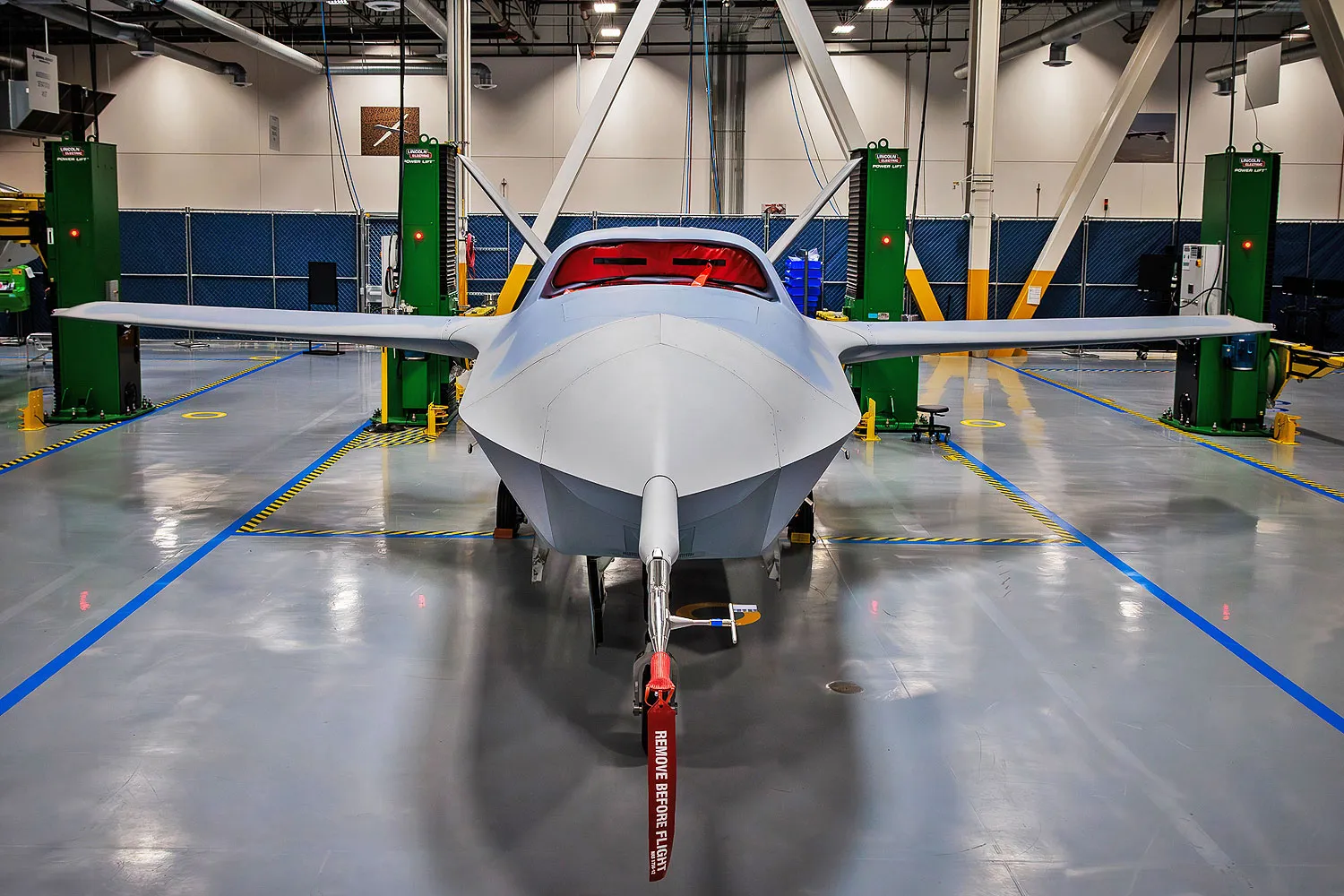
General Atomics Aeronautical Systems (GA-ASI) has released the first image of the YFQ-42A, a production test vehicle representing its proposal for the U.S. Air Force’s Collaborative Combat Aircraft (CCA) program.
The jet is one of two unmanned fighter jets selected by the Air Force and scheduled to fly for the first time by September.
Like Anduril’s YFQ-44A, the General Atomics aircraft has been undergoing ground testing since May 7.
While its rival has a ventral air intake, the YFQ-42A uses a dorsal air intake configuration, which allows for a large weapons and sensor bay.

“The YFQ-42A is an exciting next step for our company,” said GA-ASI President David R. Alexander. “It reflects many years of partnership with the U.S. Air Force of advancing unmanned combat aviation for the United States and its allies around the world, and we’re excited to begin ground testing and move to first flight.”
General Atomics, known for providing a variety of military unmanned aircraft, has already flown two other drones. The first was the MQ-20 Avenger, which made its first flight in 2009 and has logged more than 40,000 flight hours.
According to the company, it is currently used as a replacement for the jet-powered CCA for developing autonomy and critical advances in artificial intelligence and machine learning integration.

Last year, General Atomics conducted the first flight of the XQ-67A Off-Board Sensing Station (OBSS), designed to design an autonomous collaborative platform capable of rapidly adapting to multiple missions.
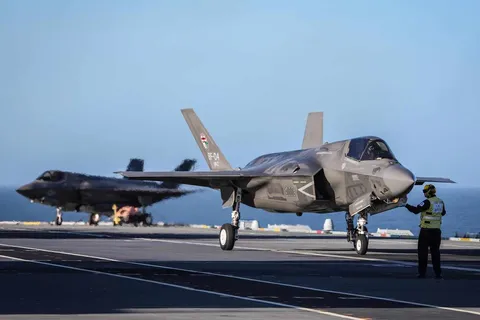
The USAF's CCA program aims to produce more than 1,000 unmanned aircraft that will act as loyal wingmen for manned fighters such as the new Boeing F-47, a sixth-generation fighter.
Its combat radius will be more than 700 nautical miles, but its maximum speed is still classified by the Air Force.
About the Author

Ricardo Meier
Creator of the website that started in 1996 as a magazine. He also writes on Brazilian websites AUTOO, MOTOO and MetrôCPTM.