KC-390 for the US depends on a solution for the refueling boom
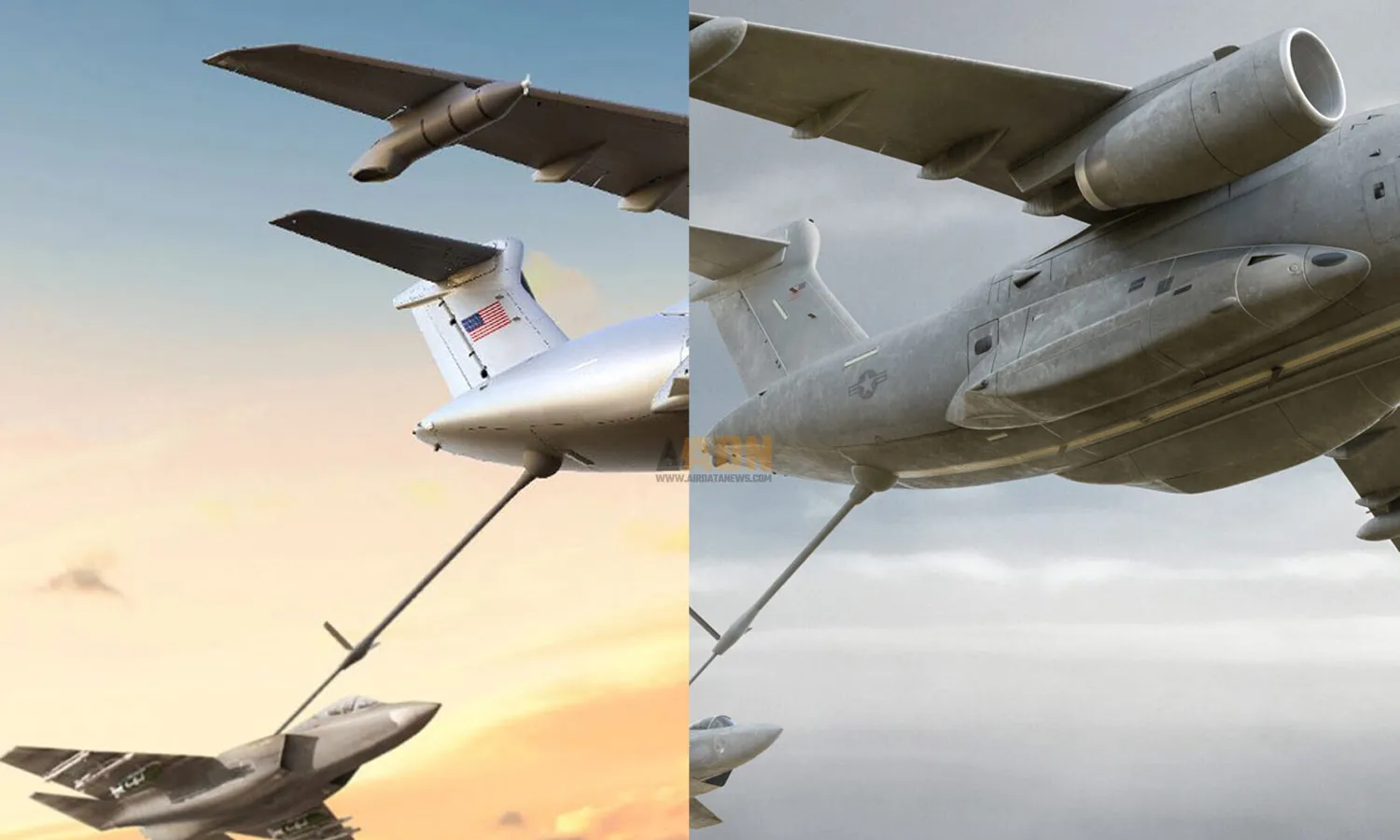
When it announced a partnership with L3 Harris to offer the “Agile Tanker” proposal to the US Air Force (USAF), Embraer released a rendering of the KC-390 with a rigid boom refueling a fighter.
The image showed the boom attached to the rear cargo door of the multi-role aircraft, a configuration that was not very functional since the Millennium would have as a differential the preserved capacity to transport around 26 tons of cargo.
The partnership with L3 Harris was dissolved, however, Embraer did not give up on convincing the USAF to consider the KC-390 as a tactical tanker aircraft, capable of operating on runways where the KC-46 and KC-135 cannot.

A few weeks ago, the Brazilian manufacturer participated in an important Air Force seminar, where it once again proposed its aircraft as an alternative to the “bridge tanker”, while the service does not define what its large aerial refueling aircraft will look like – possibly stealthy.
A new image without the USAF markings, but with the US flag, was released. In it, the rigid boom appears in a higher position, at the top of the cargo door.
Assembly line in the U.S.
In an interview with Flight Global, Embraer’s commercial director, Frederico Lemos, acknowledged that the position of the boom is one of the key points in making the KC-390 attractive to the US Air Force.
According to him, the installation of the boom cannot compromise the Millennium’s core capacity as a transport aircraft.

The issue is complex since in order to accommodate vehicles and bulky cargo, in addition to dropping paratroopers or even pallets, the rear door needs to be fully open.
And the boom is a large piece of equipment because it needs to extend to a safe distance so that the aircraft to be refueled can approach.
In any case, for Embraer, the chance of a contract with the United States has been worth the investment. The company is aware that a KC-390 for the USAF will have to be produced in the country and with a majority of local content.
This does not seem to be a problem since the KC-390 meets the Buy American Act requirements and can reach 70% local content with an assembly line in the U.S.
About the Author

Ricardo Meier
Creator of the website that started in 1996 as a magazine. He also writes on Brazilian websites AUTOO, MOTOO and MetrôCPTM.