KC-Z4, the aircraft that could solve the USAF's aerial refueling problem
The U.S. Air Force (USAF) lost an important aircraft in its tanker inventory last year when the last KC-10 Extender was retired.
The huge three-engine widebody developed from McDonnell Douglas’ DC-10 commercial jet was an asset to the service and for many it still does not have a worthy replacement, despite the arrival of the Boeing KC-46A Pegasus.
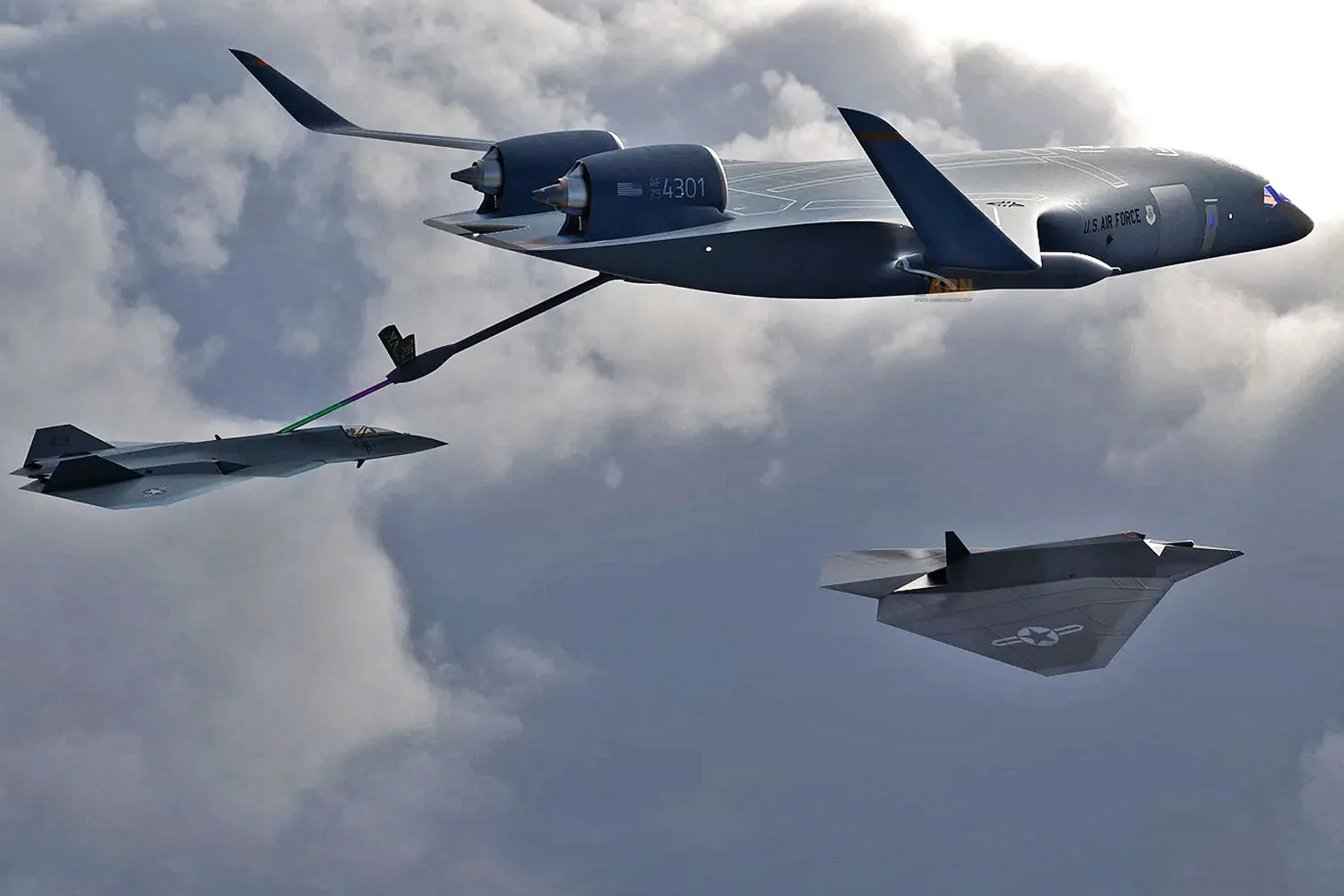
But for startup JetZero, the solution exists, the KC-Z4. An aerial refueling variant of the twin-engine passenger jet that the company is developing, the aircraft uses the blended-wing concept to offer much more efficient performance than current aircraft.
The magic lies precisely in the enormous internal volume provided by its configuration, which also guarantees great lift and low drag, in addition to a low radar cross section.
The concept is not new and has been tested by NASA and other companies in recent decades, but has never entered series production.

JetZero wants to solve this by offering the Z4 to airlines, but it also has its eye on a government contract.
The USAF has already awarded the company a $235 million contract to build a full-scale demonstrator that should be ready in 2027.
According to the company’s statement to Air Force Magazine, the project will undergo a critical review and then the selection of the production site.
Six F-35s instead of one
The KC-Z4 not only solves the dilemma of refueling more planes over longer distances, but it will also be able to carry more cargo, take off from shorter runways and consume about 50% less fuel than current tube-and-wing planes.

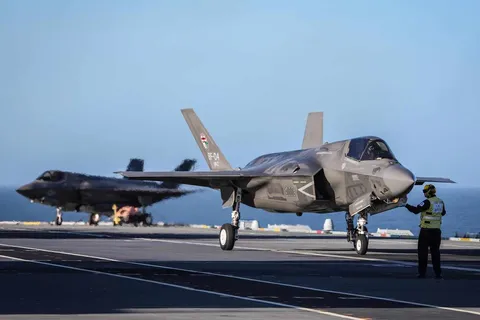
A potential JetZero tanker would be capable of flying 4,000 nautical miles to deliver 60,000 pounds of fuel to six F-35 fighter jets, explained Nate Metzler, JetZero’s head of strategic programs and partnerships.
A KC-46 would only be capable of doing the same for one F-35.
Next Generation Aerial Refueling System (NGAS)
JetZero’s biggest challenge, however, is getting the blended-wing aircraft into production.
As a small venture, the California-based company is relying on major investments to get the Z4 assembly line off the ground and offer an attractive price for it.

Furthermore, because it is a new concept, not only assembly but also certification will certainly be a complex process, which could push the target delivery date into the future.
And the U.S. Air Force is in a hurry. Despite the KC-46 deliveries, the fleet of KC-135 workhorses is not eternal and many of them will soon have to be retired.
Studies are underway for a stealth tanker, the Next Generation Aerial Refueling System (NGAS), whose requirements could fit JetZero’s proposal.

For now, the company is focused on building the demonstrator, a job being done by Scaled Composites, which recently built Stratolaunch’s massive hypersonic launch vehicle, the ‘Roc’.
The prototype, however, will be powered by two antiquated Pratt & Whitney PW2000 turbofans similar to those on the C-17. For a production aircraft that aims to be fuel-efficient, another engine will certainly be needed.
About the Author

Ricardo Meier
Creator of the website that started in 1996 as a magazine. He also writes on Brazilian websites AUTOO, MOTOO and MetrôCPTM.