New 'A320' to be evolutionary, not revolutionary, says Airbus
Airbus has abandoned plans to introduce large commercial aircraft using hydrogen as fuel in the near future.
The technology, although much more sustainable, depends on considerable advances but above all on a global understanding between several countries to be adopted.
Instead, the future replacement for the A320, its most commercially successful aircraft, will use new, but less disruptive, technologies.
The narrow-body aircraft is, according to Guillaume Faury, CEO of Airbus, “the next thing on the agenda” for the company.

The chief executive held a press conference on Monday to talk about the decarbonization of aviation. According to Faury, the ‘new A320’ will be “evolutionary, not revolutionary”.
Open fan
Despite this, the aircraft is expected to feature some important improvements to reduce its carbon footprint. These include the use of lighter composite materials in the structure, the burning of Sustainable Aviation Fuel (SAF) and the adoption of more efficient engines.
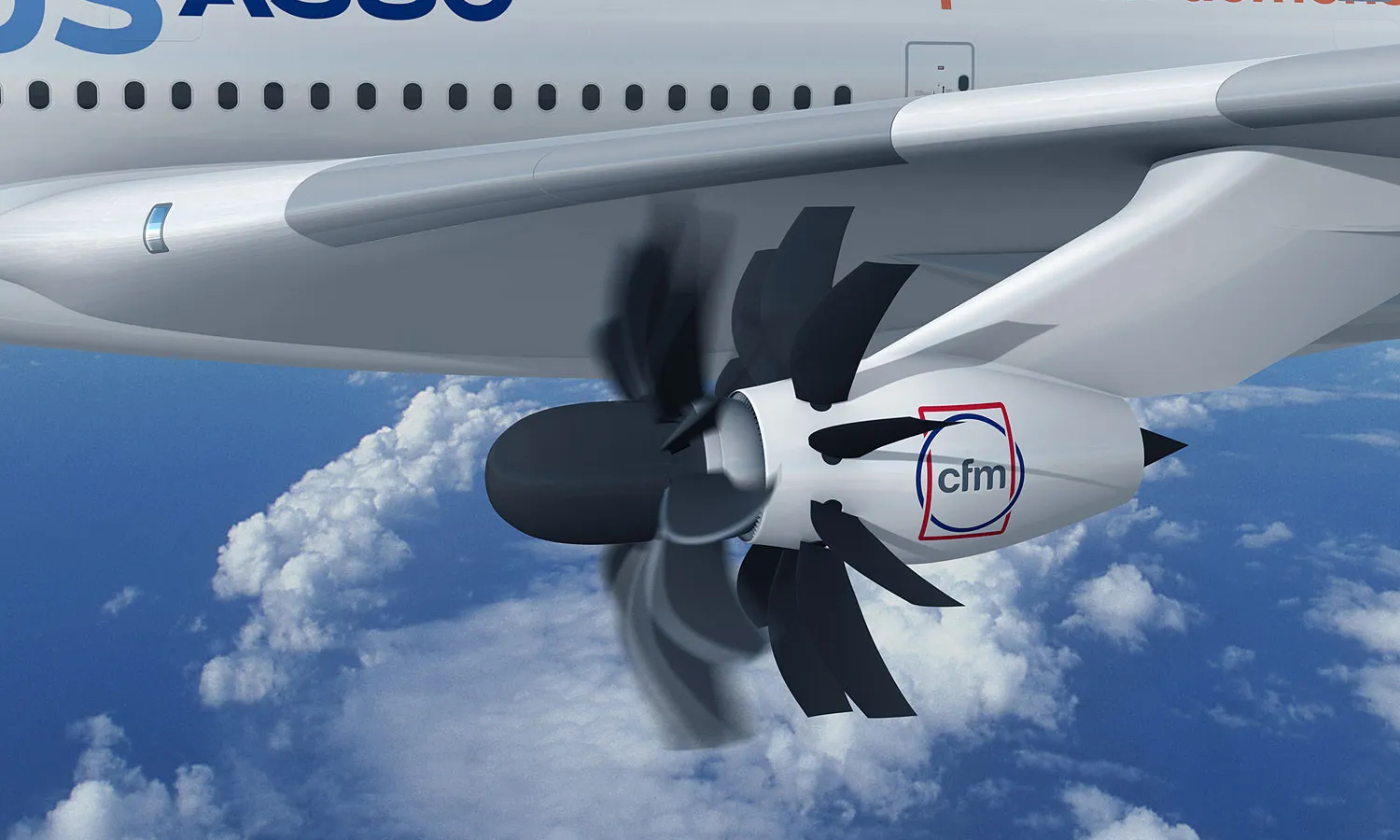
One of the projects under consideration is CFM’s RISE, an open fan concept in which the engine blades are located outside the fairing.

The configuration promises to reduce engine consumption by around 20% which, combined with other technologies, could make the new aircraft much more environmentally efficient than the A320neo family.
Another option being evaluated is large-span folding wings, an idea that Airbus had previously considered, in addition to state-of-the-art batteries that would allow for hybrid propulsive or non-propulsive architectures.
Although there is no official schedule, it is understood that the new commercial jet should reach the market between 2035 and 2040.
Even so, the CEO of Airbus stated that the goal of making air travel CO2 neutral by 2025 is the right path, but it may take longer than expected.
About the Author

Ricardo Meier
Creator of the website that started in 1996 as a magazine. He also writes on Brazilian websites AUTOO, MOTOO and MetrôCPTM.


