 Defense
US Department of Defense highlights China’s advances in sixth-generation fighter and AEW&C capabilities
The US Department of Defense released its annual report on China’s military developments, emphasizing significant advances in Chinese airpower.
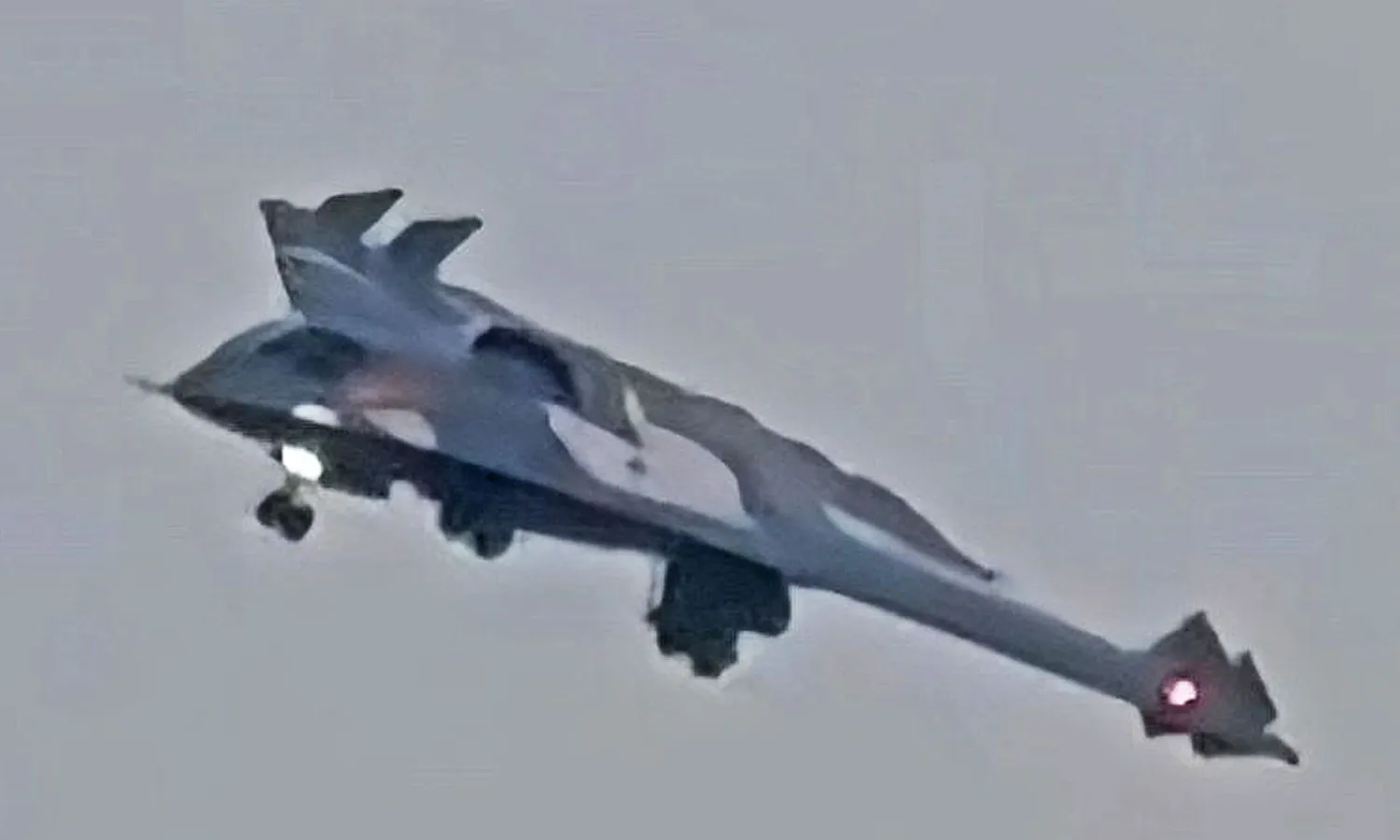
The report cites recent testing of two tailless sixth-generation fighter prototypes, the Chengdu J-36 and Shenyang J-50/XDS, and notes the debut flight of the KJ-3000 airborne early warning and control (AEW&C) aircraft in 2024.
The Pentagon, however, anticipates that China’s sixth-generation fighters will enter service by 2035. “Once operational, a sixth-generation aircraft will likely be suitable for various combat missions, including air-to-air and air-to-surface missions, as well as guiding uncrewed aircraft in combat missions,” according to the Pentagon report.

Testing of the J-36 and J-50 began in December 2024, with the Shenyang-developed twin-engine tailless fighter, known as ‘J-50’, spotted on multiple flights since its first appearance. The Chengdu J-36, featuring three engines and larger dimensions, was observed flying alongside a two-seat Chengdu J-20, indicating parallel development of advanced stealth designs.
The KJ-3000 AEW&C aircraft, which completed its first flight in 2024, is highlighted as possibly the first in the world to incorporate digital radar with anti-jamming, passive detection, and target identification features. “The KJ-3000 will probably be the world’s first model to use digital radar and will be capable of anti-jamming, passive detection, and target identification,” the Pentagon report states.
The report also references the Fujian aircraft carrier’s inaugural sea trials and dual-carrier operations involving Liaoning and Shandong. The WZ-9 Divine Eagle unmanned aerial vehicle is described as ‘semi-operational’ following its deployment in the South China Sea.

Historically, Chinese engine development has faced delays, with the Pentagon noting, “Engine advancement will likely be gradual, as China steadily works to resolve various technological barriers that have historically delayed its advanced propulsion projects.”
The recent test flights of the J-50 and J-36 follow a pattern of rapid iteration in China’s pursuit of advanced air combat platforms. The Shenyang J-50 features a Lambda-type design with divertless supersonic ventral air intakes, while the Chengdu J-36’s three-engine configuration and larger size differentiate it from previous Chinese stealth fighters.
About the Author