 Defense
Rolls-Royce completes F130 altitude testing for USAF B-52J re-engining program
Rolls-Royce has completed altitude and operability testing of its F130 engine for the U.S. Air Force’s B-52J Commercial Engine Replacement Program (CERP), marking another step in the modernization of the long-serving bomber fleet.
The tests were conducted at the Arnold Engineering Development Complex (AEDC) in Tullahoma, Tennessee, where Rolls-Royce and Air Force teams evaluated engine performance under high-altitude and stressed airflow conditions. The campaign included sustained altitude runs for long-duration missions, operability testing using distortion screens to simulate turbulent airflow, and Integrated Drive Generator (IDG) testing in coordination with Boeing to verify stable electrical power generation.
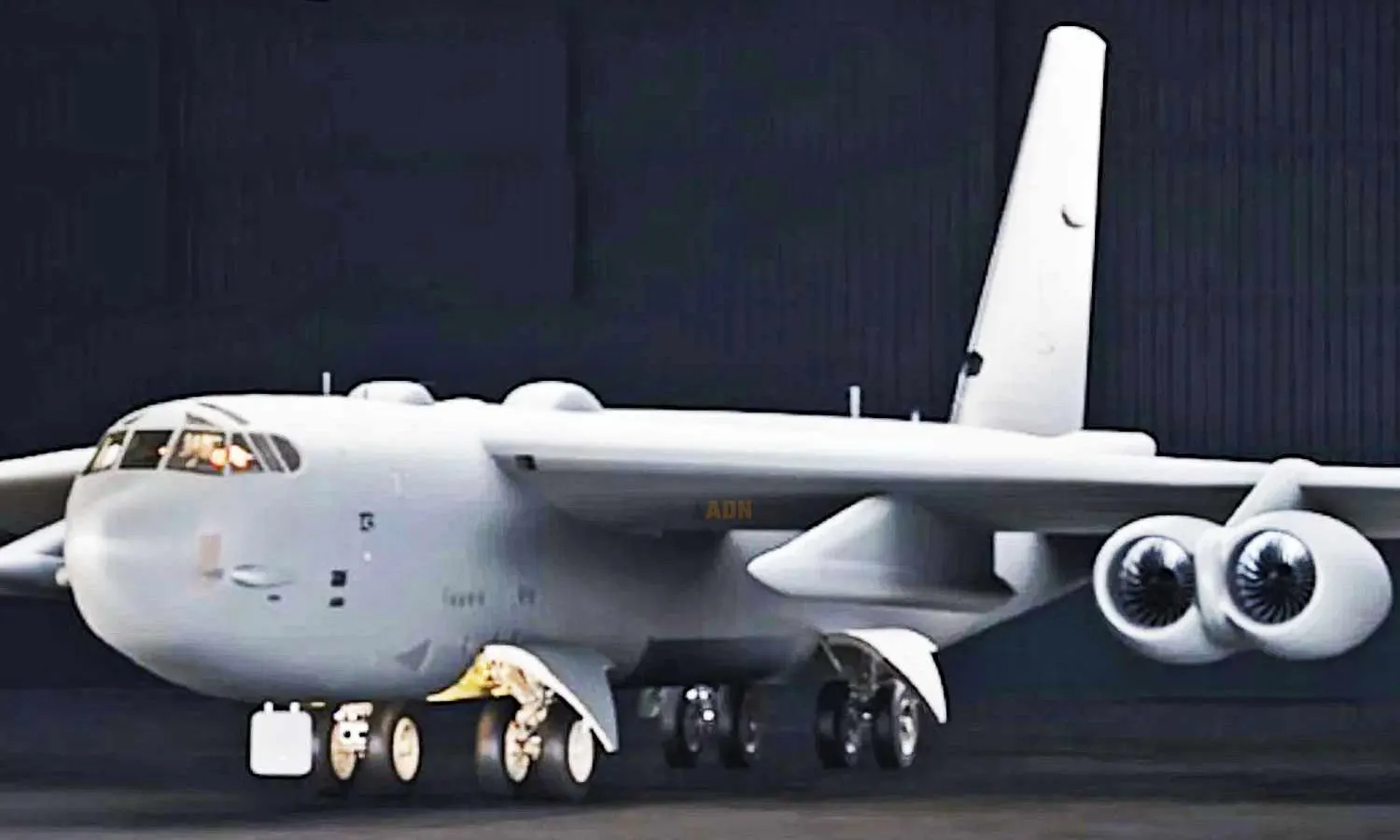
The milestone follows the program’s Critical Design Review (CDR), completed in late 2024, which authorized the build of the first flight-test engines. Earlier phases of testing included sea-level runs at Rolls-Royce’s upgraded test facility in Indianapolis and dual-pod configuration trials at NASA’s Stennis Space Center. The B-52J will retain its characteristic twin-engine pod layout, with two F130 engines mounted per pylon.

The next phase of the program will involve further system integration and additional dual-pod testing before installation on test aircraft and flight evaluation.
The F130 is derived from the BR725 commercial engine and is intended to replace the B-52’s existing TF33 powerplants, which date back to the early 1960s. Rolls-Royce says the new engine design allows full interchangeability between pod positions, simplifying logistics compared with the current left-right engine configuration.
The B-52 re-engining effort is part of a wider modernization plan that will see the aircraft redesignated as the B-52J. In addition to the new F130 engines, the bomber is receiving a new active electronically scanned array (AESA) radar and updated avionics. The U.S. Air Force plans to keep the B-52 in service into the 2050s, where it will operate alongside the Northrop Grumman B-21 Raider stealth bomber.
Production of the F130 engines will take place in Indianapolis. Rolls-Royce has invested more than $1.5 billion in its U.S. operations over the past decade, including upgrades to its manufacturing facilities supporting defense programs.
About the Author

Ricardo Meier
Creator of the website that started in 1996 as a magazine. He also writes on Brazilian websites AUTOO, MOTOO and MetrôCPTM.