 Defense
Russia to Begin Su-75 Checkmate Prototype Assembly in 2025
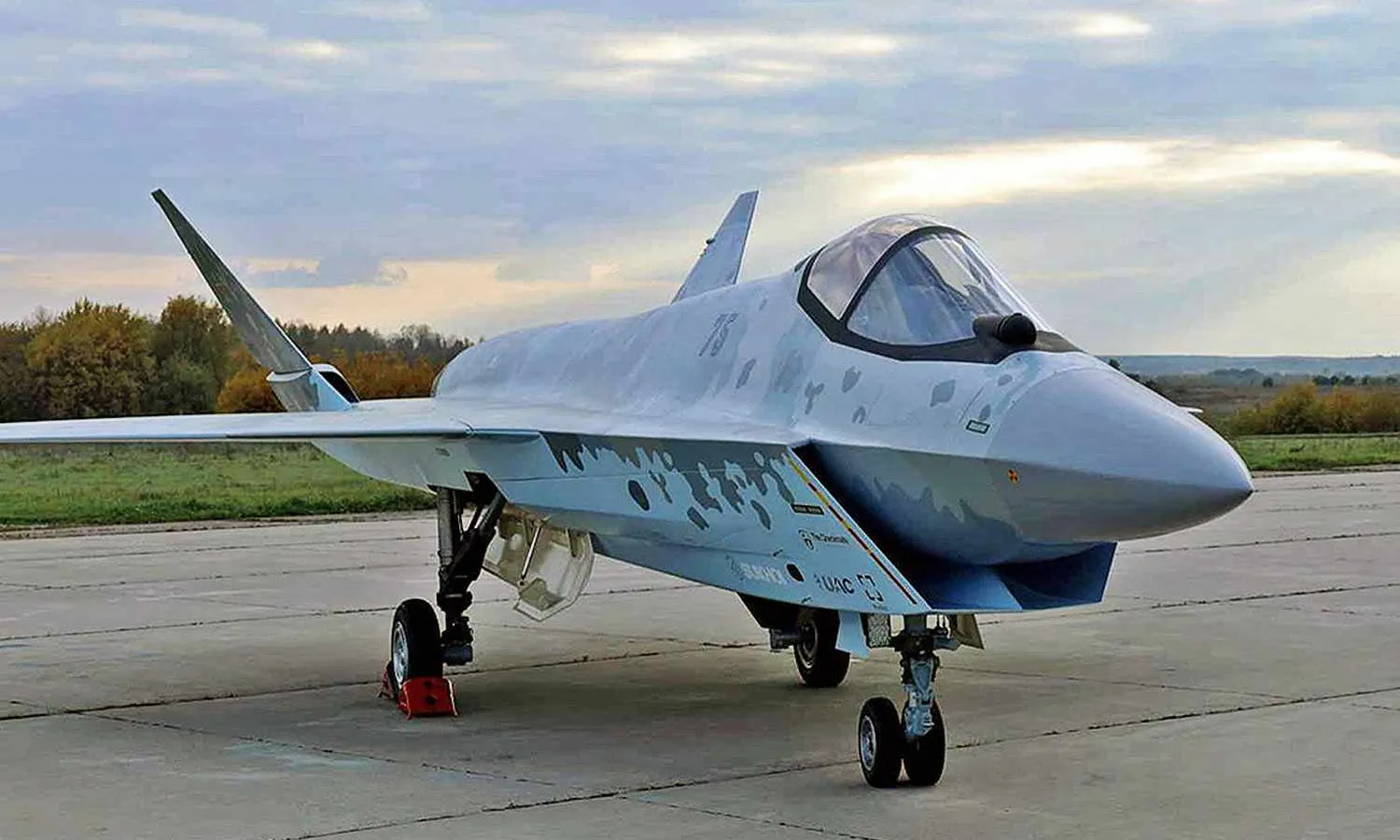
Russia will begin assembly of the first prototype of the Su-75 Checkmate fighter in 2025, according to an announcement by Denis Manturov, Minister of Industry and Trade. The program is led by the Komsomolsk-on-Amur Aviation Production Plant, with flight testing targeted for 2027.
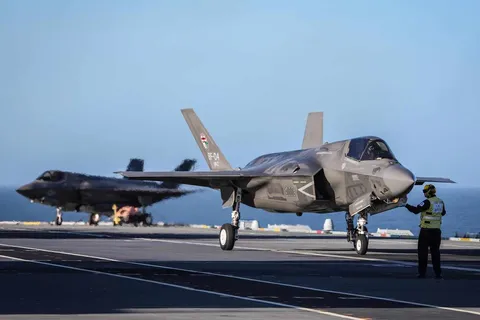
The Su-75 is presented as a single-engine, fifth-generation aircraft positioned as a cost-effective alternative to Western platforms such as the Lockheed Martin F-35A. Its projected unit price is approximately US$30 million, significantly below the F-35A’s estimated US$80 million.
With a maximum takeoff weight of 18 tons and a top speed of up to Mach 2, the Su-75 is designed for a range of up to 2,800 km. The aircraft can operate from short runways of 400-500 meters and offers a payload capacity of 7,400 kg, with some armaments carried internally to reduce radar signature.

Russia is promoting the Su-75 as a platform with potential for integration of Western components, such as radar systems, based on customer requirements. The program seeks to attract buyers seeking lower acquisition and operating costs while offering stealth characteristics.
Behind US and China
The Su-75 is Russia’s first new single-engine fighter project in over three decades, following its unveiling at MAKS Air Show in 2021. Despite ongoing sanctions since 2022, the Russian aerospace sector continues to produce types such as the Su-35S and Su-34, albeit at reduced volumes compared to US and Chinese output.
Manturov’s prediction, however, is highly questionable. The Checkmate was originally promised for 2026, but since its unveiling, only a mock-up has been presented.

The Russian aerospace industry is under pressure to expand production amid budget constraints, and the focus has been on producing the Su-57 fighter jets, of which 76 aircraft are on order.
The alleged stealth capability has also sparked skepticism not only in the West but also in its partner China, which is much more advanced in this regard.
The program faces significant competition from China’s J-35 and the US F-35, as the global market for advanced fighters remains highly contested.
About the Author

Ricardo Meier
Creator of the website that started in 1996 as a magazine. He also writes on Brazilian websites AUTOO, MOTOO and MetrôCPTM.