 Defense
Second B-21 Raider nuclear bomber is close to flying
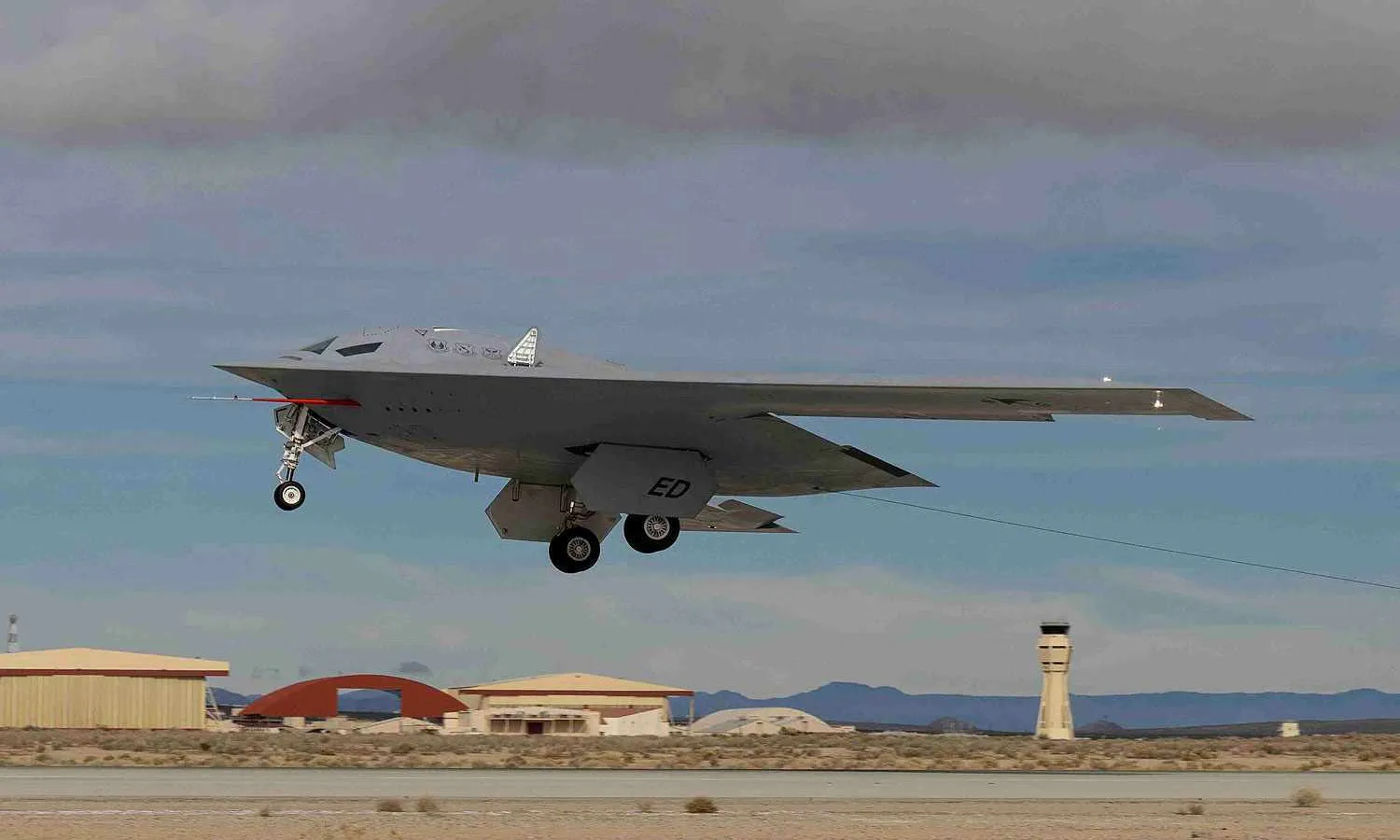
The U.S. Air Force’s B‑21 Raider program is entering a new phase as the second aircraft is expected to fly soon, and production capacity is set to increase. Gen. Thomas Bussiere, commander of Global Strike Command, confirmed the developments in a July 25 interview with Air & Space Forces Magazine.
“We should see the second developmental test bird fly shortly,” Bussiere said. The first B‑21 flew in November 2023 and has since been flying from the Edwards Air Force Base. While the number of aircraft in production remains classified, at least six airframes are known to be in some stage of assembly.
Congress recently approved $4.5 billion in additional funding to ramp up production. While exact figures remain undisclosed, defense analysts estimate a peak rate of around seven aircraft annually could be reached.
Bussiere dismissed concerns that increasing production might jeopardize the program’s stability. “Programs typically become risky when there are delays or capability shortfalls. That’s not happening here,” he said.
USAF plans to receive at least 100 bombers
The B‑21 is not a radical leap in aerospace technology, but rather a carefully crafted evolution of lessons learned from the B‑2 Spirit. It emphasizes stealth, sustainability, ease of maintenance, and operational readiness.

Unlike the B‑2, which was initially nuclear-only, the B‑21 will be certified for both nuclear and conventional missions from the outset. Although the original Long-Range Strike Bomber contract included plans for a remotely piloted version, Bussiere confirmed this is not part of the current roadmap.
One of the Raider’s biggest advantages is its maintainability. The B‑2 required extensive labor to preserve its low-observable coating. In contrast, the B‑21 has been designed with easier access, modular components, and reduced maintenance demands—making it a more practical aircraft for daily operations.
While the test aircraft won’t be deployed operationally, they are being built to match production configurations as closely as possible, ensuring no capability gap when the B‑21 enters service.
The USAF plans to receive at least 100 aircraft to replace the B-1B Lancer and B-2 Spire bombers over the next decade.
About the Author

Ricardo Meier
Creator of the website that started in 1996 as a magazine. He also writes on Brazilian websites AUTOO, MOTOO and MetrôCPTM.