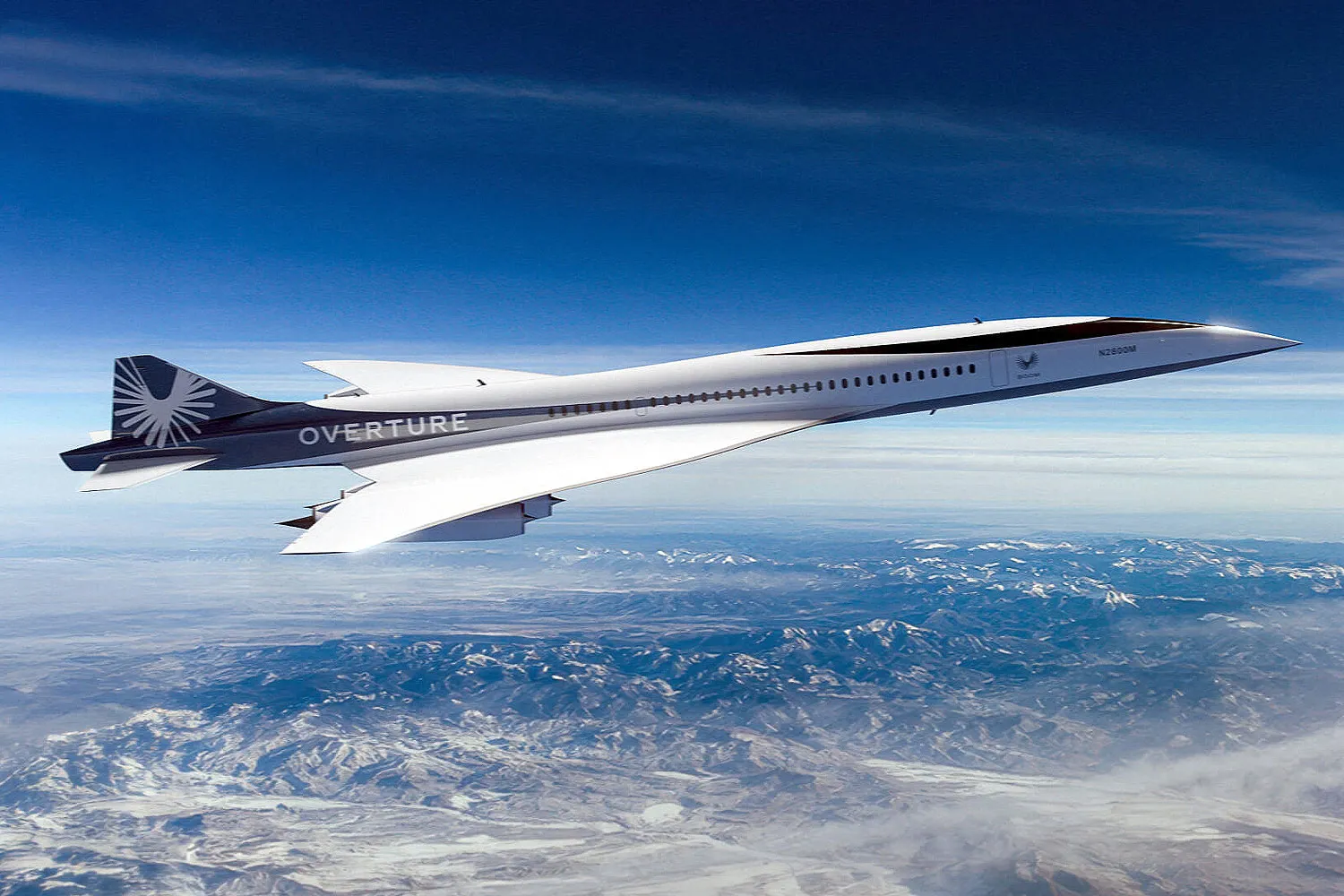
Trump orders lifting of ban on civilian supersonic flights in the US
President Donald Trump issued an executive order on June 6 that directs the Federal Aviation Administration (FAA) to lift legislation that prevents civilian supersonic flight over the United States.
The regulation was implemented in 1973 and prohibits civilian flights above the speed of sound over US territory and directly affected the plans of BAC and Aerospatiale, partners in the project of the Concorde, a supersonic passenger plane.
Trump’s order sets a deadline of 18 to 24 months for the FAA to publish a new regulation that creates an acceptable noise certification standard for supersonic aircraft.
The change comes shortly after the Supersonic Aviation Modernization (SAM) Act was introduced in the U.S. Congress by Republican Senator Ted Budd of North Carolina.
The bill would allow civilian supersonic aircraft to fly over land as long as they do not produce an audible sonic boom on the ground.

“For more than 50 years, outdated and overly restrictive regulations have grounded the promise of supersonic flight over land, stifling American ingenuity, weakening our global competitiveness, and ceding leadership to foreign adversaries,” the executive order says.
In addition to repealing old laws and establishing new regulations on the subject, the executive order established that several U.S. federal agencies will undertake efforts to allow the development of supersonic flight technology and seek regulatory agreements with other countries through the ICAO.
Boom Supersonic celebrated Trump’s order
The biggest beneficiary of the US president’s announcement is the startup Boom Supersonic, which is developing a civilian supersonic airliner, the Overture.
With capacity for 80 passengers, the four-engine jet will fly at up to Mach 1.7, a lower performance than the Concorde, but achieved in a less expensive way and with less environmental impact.

Boom promises to shorten distances on domestic flights in the United States, but at a lower speed, up to Mach 1.3. The reason is that the company is betting on the Mach Cutoff concept, in which the shock waves generated by the supersonic boom are dissipated before reaching the surface.
The startup proved the concept by breaking the sound barrier six times earlier this year using its XB-1 demonstrator.
Law limited the market for Concorde
The 1973 legislation came about amid the development of the Concorde, a European project that promised to transport just over 100 passengers at twice the speed of sound.
The Franco-British aircraft had orders from several airlines, including the US, but the oil crisis undermined its chances as the jet consumed a lot of fuel.

Despite this, there was hope that the world’s largest air travel market, the United States, would receive a good number of jets, especially after the end of the Boeing 2707 project, an even larger and faster supersonic aircraft.
However, the law limited Concorde flights to New York and any flights over the country were done at subsonic speed, like other commercial jets.
About the Author

Ricardo Meier
Creator of the website that started in 1996 as a magazine. He also writes on Brazilian websites AUTOO, MOTOO and MetrôCPTM.


