 Defense
Two more B-21 bombers to fly in 2026, with combat capability if needed
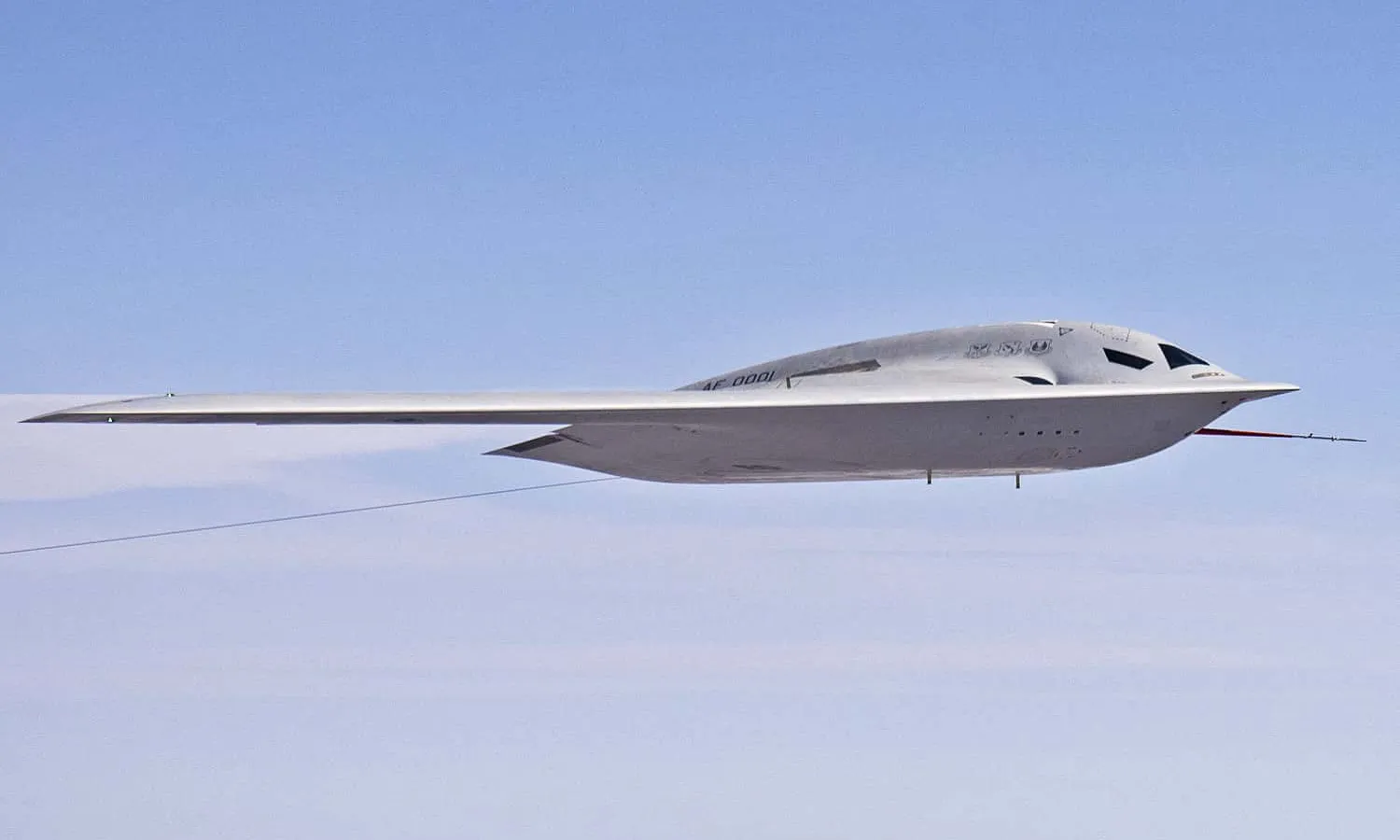
The U.S. Air Force has confirmed that at least two more B-21 Raider bombers will be flying in 2026, and that these test aircraft will be combat-capable if necessary.
Built as production aircraft, these early B-21s represent a significant step in the development of the Air Force’s next-generation long-range strike capability.
Although intended for flight testing, the aircraft can be rapidly converted for operational use by removing test-specific equipment such as the nose boom, the service said to the Air & Space Forces Magazine.
The confirmation came as the 2026 U.S. defense budget earmarked $10.3 billion for the B-21 program, including $4.5 billion for increased production. Both the Air Force and Congress have signaled their intent to ramp up manufacturing of the stealth bomber, which is being built by Northrop Grumman at Plant 42 in Palmdale, California.

Production expansion will take place mostly within existing infrastructure and with Tier 1 suppliers such as BAE Systems, Collins Aerospace, GKN Aerospace, Spirit AeroSystems, and Pratt & Whitney, which builds the B-21’s engines, according to the outlet. The Air Force emphasized that this “proactive measure” is essential to sustain a stable, efficient production line.
The Air Force has not disclosed when the B-21 will achieve Initial Operational Capability (IOC), but stated that the decision will be made by Air Force Global Strike Command based on classified criteria.

The B-21 is expected to replace the B-2 Spirit and B-1B Lancer starting in the early 2030s. The program’s first operational base and training center will be Ellsworth Air Force Base in South Dakota, where construction has been underway for three years.
Although Northrop Grumman took a $477 million charge earlier this year to cover a shift to higher production rates, the Air Force remains committed to a minimum fleet of 100 B-21 bombers. The aircraft offers advanced stealth, global strike reach, and integration into future joint force operations.
About the Author

Ricardo Meier
Creator of the website that started in 1996 as a magazine. He also writes on Brazilian websites AUTOO, MOTOO and MetrôCPTM.