Defense
U.S. and Israel launch joint strikes on Iran amid large-scale U.S. military buildup
The United States and Israel launched joint military strikes against Iran on Saturday, February 28, with U.S. President Donald Trump confirming the start of what he described as “major combat operations.”
Explosions were reported across Tehran early Saturday, with Iranian state media citing blasts in the east and north of the capital. Smoke was seen rising from several districts, including areas near key government facilities. Additional explosions were reported in cities such as Isfahan, Qom, Karaj and Kermanshah. Iranian authorities have not confirmed the full extent of the damage or provided casualty figures.
Israel declared a nationwide state of emergency in anticipation of retaliation, warning of potential Iranian missile and drone strikes. Both Israel and Iran temporarily closed their airspace to civilian traffic.
In a video statement, Trump said the strikes were aimed at degrading Iran’s missile capabilities and preventing further development of its nuclear program. Israeli officials characterized the operation as pre-emptive.

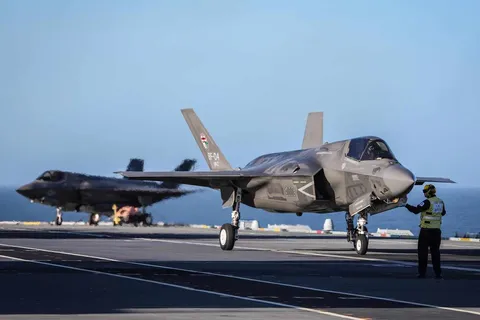
The escalation follows a significant U.S. military buildup in the Middle East in recent weeks. According to open-source tracking data and defense officials, Washington repositioned a large number of military aircraft to bases in Europe and the region, including F-15, F-16, F-22 and F-35 fighter jets, as well as aerial refueling tankers and surveillance platforms.
At sea, two U.S. aircraft carrier strike groups have moved into the broader theater. The USS Abraham Lincoln (CVN 72) is operating in the Arabian Sea, while the USS Gerald R. Ford has been sailing toward the region. U.S. Navy destroyers equipped with cruise missiles and air defense systems are also deployed.
Iranian officials warned of a “crushing retaliation,” according to Reuters, as tensions rose sharply following the coordinated strikes. Independent reporting from inside Iran remains limited, and investigations into the full scope of the operation and its consequences are ongoing.
About the Author

Ricardo Meier
Creator of the website that started in 1996 as a magazine. He also writes on Brazilian websites AUTOO, MOTOO and MetrôCPTM.