Airports
UK Government Approves Second Runway at Gatwick Airport
The UK government has granted approval for the construction of a second runway at London Gatwick Airport, advancing a £2.2 billion privately funded project intended to expand the airport’s capacity and support economic growth.
The project involves repositioning the existing Northern Runway by 12 meters to allow simultaneous operations, while the current main runway continues to serve as the airport’s primary landing and takeoff strip.
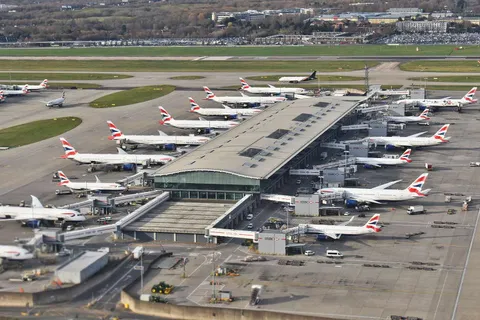
Gatwick, which handles over 40 million passengers annually and operates about 280,000 flights per year, is currently recognized as Europe’s busiest single-runway airport.
Government officials, including Transport Secretary Heidi Alexander and Chancellor Rachel Reeves, have highlighted job creation and increased investment as key outcomes, with projections of thousands of new jobs and billions in economic activity, according to BBC.
With the new runway, Gatwick’s annual flight capacity could rise to 389,000 by the late 2030s, while passenger capacity is expected to reach up to 80 million.

The approved plans also allow for up to 40,000 additional flights before the new runway becomes operational, and an increase of 70,000 flights once it is in use. At present, the Northern Runway serves mainly as a taxiway or backup and has not been used for regular departures or arrivals.
The expansion project includes new measures for noise management and compensation for local residents affected by increased airport activity. Despite government support, the plans have drawn opposition from environmental groups such as Greenpeace and Stay Grounded, as well as local organizations, citing concerns over air quality and climate impact.
Labor union Unite the Union expressed support contingent on guarantees for well-paid jobs and adequate worker facilities. The project at Gatwick follows recent airport expansion approvals in the UK, including at Luton, and comes amid ongoing discussions about a potential third runway at Heathrow, which faces additional complexities.
About the Author

Ricardo Meier
Creator of the website that started in 1996 as a magazine. He also writes on Brazilian websites AUTOO, MOTOO and MetrôCPTM.