Ukraine drone strike hits four Ilyushin Il-76 transport aircraft
A massive drone attack from Ukraine in the early hours of Wednesday (30) hit several locations in Russia, including the Pskov airfield, 600 km from Moscow and close to the country's border with Latvia.
According to the Ukrainian government, four Ilyushin Il-76 transport aircraft were destroyed in addition to other planes whose situation was not clarified.
TASS, the Russian state news agency, confirmed the same number of damaged planes, two of which were on fire. A video shared on social media shows what appears to be an Il-76 burning.
https://twitter.com/Gerashchenko_en/status/1696799723317760083
The new attack comes about a week after a drone hit a Tupolev Tu-22M3 bomber at Soltsy-2 air base, about 120km east of Pskov.
The Pskov air base is home to the 334th Military Transport Aviation Regiment of the Russian Aerospace Forces (acronym VKS in Russian) and has 27 revetments for large aircraft.

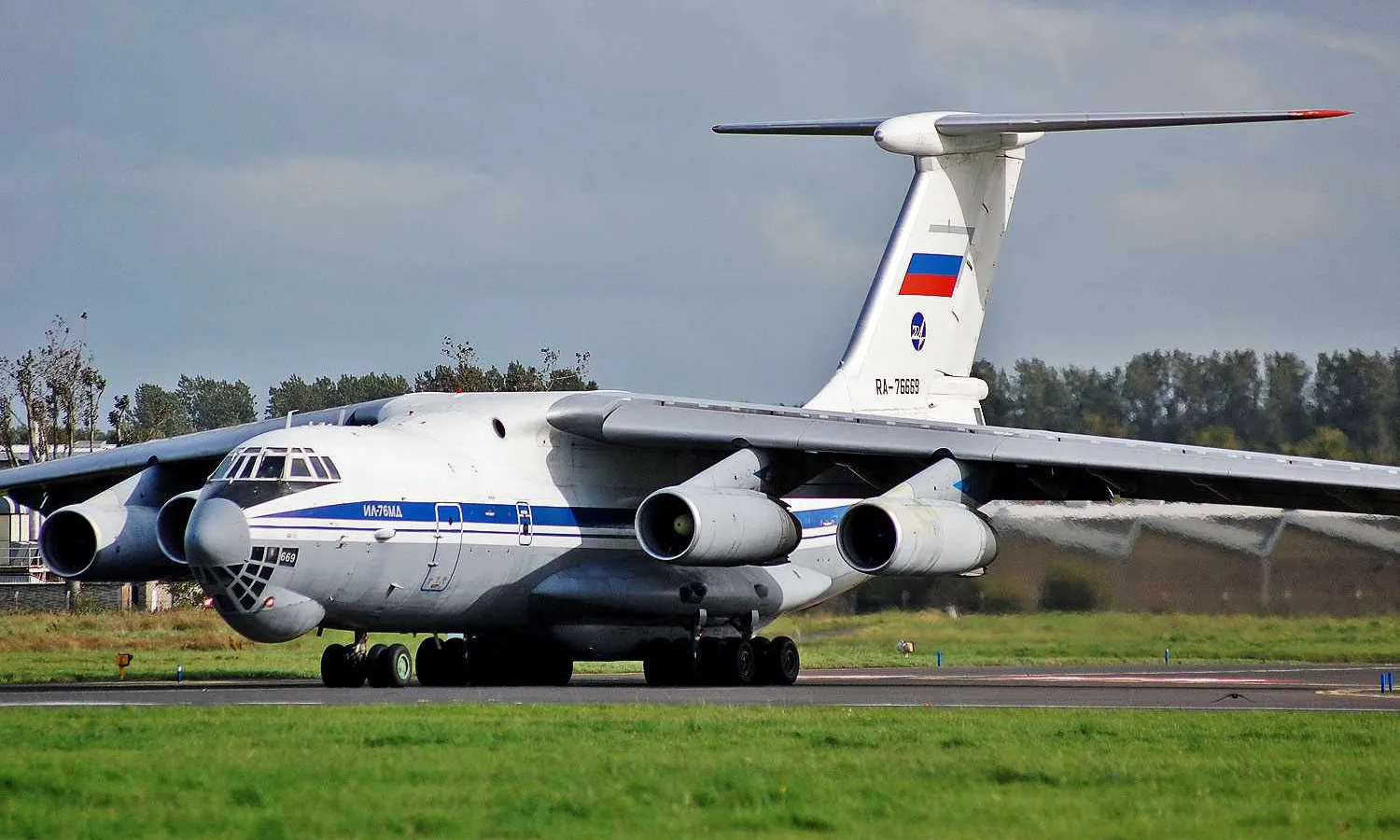
The Il-76 is the backbone of Russian military transport, with around 120 aircraft in service and more on order.
The aircraft has a configuration similar to the U.S. Air Force Lockheed C-141 Starlifter, with a high wing and four low-bypass turbofan engines, in addition to a T-tail.

Developed in the late 1960s, the Il-76 first flew in March 1971 and entered service in 1974. It is used by several air forces and also cargo airlines.
The four-engine retained two features associated with World War II bombers, the glazing area in the nose and the turret with a cannon at the base of the vertical stabilizer.
About the Author

Ricardo Meier
Creator of the website that started in 1996 as a magazine. He also writes on Brazilian websites AUTOO, MOTOO and MetrôCPTM.