Ukrainian drone attack on Russia reportedly destroyed a dozen planes, US says
The high-profile Ukrainian drone operation over the weekend, codenamed “Spider’s Web” — may have caused less damage to Russian airpower than initially claimed by Ukraine, according to U.S. assessments.
While Ukrainian President Volodymyr Zelenskiy announced that 41 aircraft had been hit and that half were damaged beyond repair, U.S. officials estimate the number of destroyed aircraft to be around 10, with up to 20 aircraft affected in total.
The revised figure, revealed by two anonymous U.S. sources to Reuters, paints a more moderate picture of the attack’s immediate impact. Still, American officials described the operation as highly significant, especially due to its reach and the vulnerability of strategic military assets.
Drone strike deep inside Russian territory
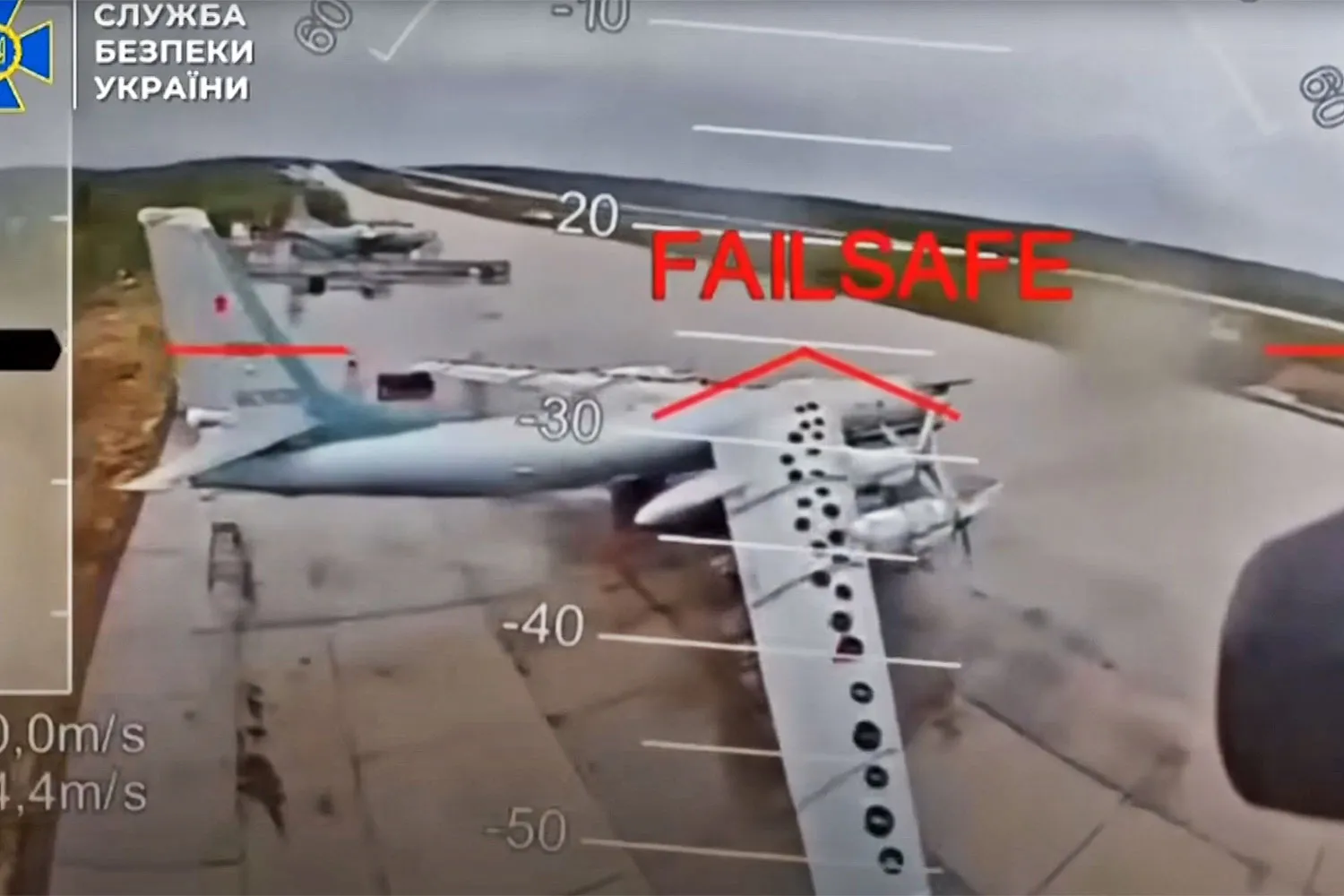
The Ukrainian assault targeted four airbases across Russia using 117 drones, reportedly launched from concealed containers positioned near the targets. Kyiv released video footage of drones striking Tu-95 and Tu-22M3 strategic bombers, and even landing on the dome antennas of rare A-50 early warning aircraft.
Ukraine’s security service (SBU) estimates that the damage totaled $7 billion, and claimed that 34% of Russia’s cruise missile-carrying aircraft were hit. However, these figures have not been independently verified. Satellite imagery obtained after the strike shows apparent damage to some long-range bombers, but the overall scale remains uncertain.

Russia acknowledged that its airfields in Murmansk, Irkutsk, Ivanovo, Ryazan, and Amur were targeted, confirming that several aircraft caught fire in at least two locations. The Russian Ministry of Defense stated that some attacks were repelled and made no public mention of losses.
Strategic implications and calls for restraint
While the scale of destruction is in dispute, the symbolic impact of the attack is clear. Ukrainian forces demonstrated the ability to strike targets more than 4,000 kilometers from the front lines — deep within Russian territory — in one of the boldest drone operations of the war.

Still, the strike raised concerns over escalation. Some of the aircraft targeted are part of Russia’s nuclear triad, a fact that drew attention in Washington. Keith Kellogg, a national security advisor to former U.S. President Donald Trump, warned that targeting nuclear-capable bombers could provoke unpredictable reactions from Moscow.
Russia has called on the United States and United Kingdom to restrain Kyiv and accused Western nations of indirectly encouraging the attacks. Meanwhile, several Russian military bloggers criticized the country’s aerospace command for security lapses and leaving high-value aircraft exposed.
About the Author

Ricardo Meier
Creator of the website that started in 1996 as a magazine. He also writes on Brazilian websites AUTOO, MOTOO and MetrôCPTM.