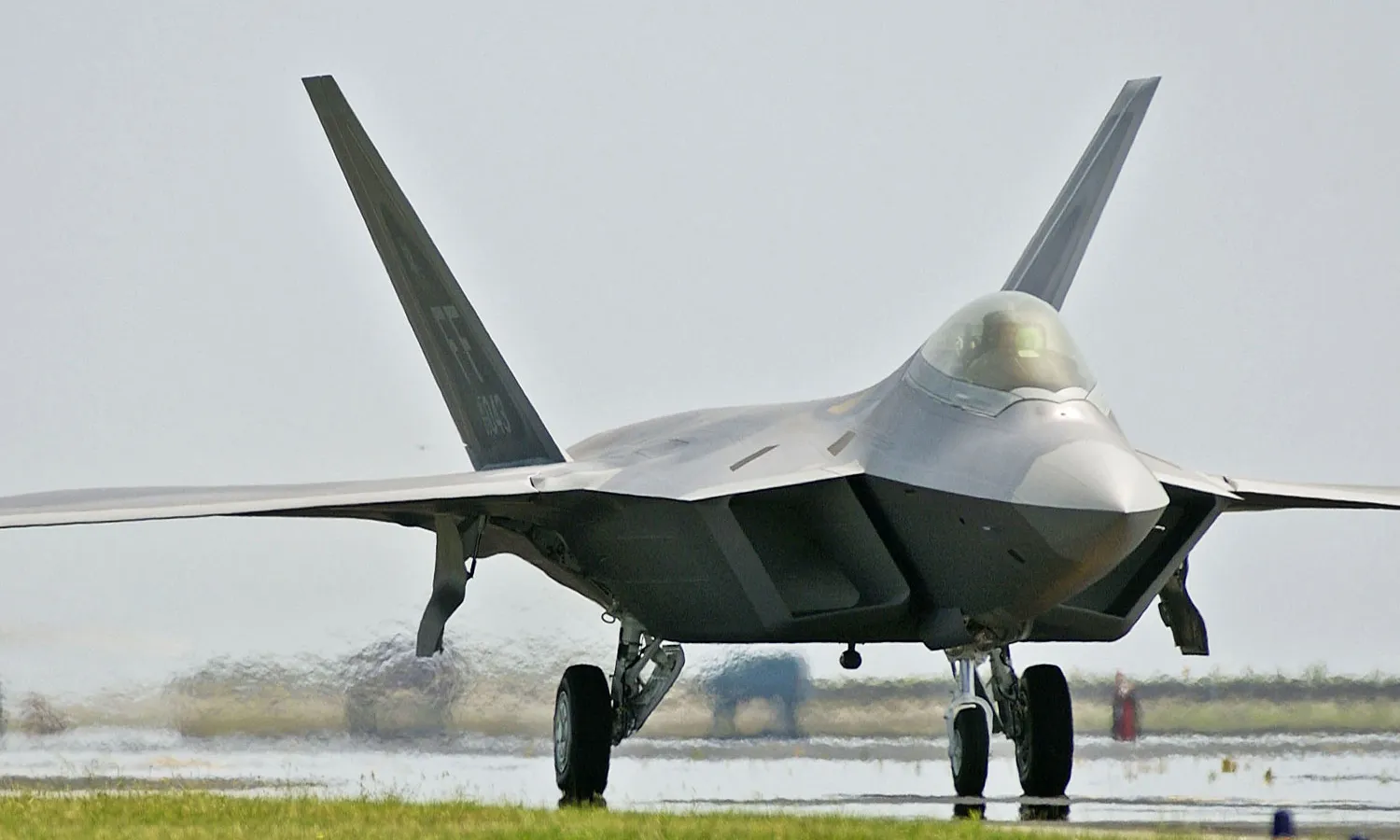
US Air Force F-22 Raptor fighters to feature new infrared sensors
Lockheed Martin has confirmed that it has received a $270 million contract from the US Air Force (USAF) to deploy an infrared defensive sensor system on the F-22 Raptor fighter.
According to the company, the stealth aircraft will soon feature an embedded TacIRST sensor suite that will increase its survivability and lethality in combat.
The system is known by the acronym IRDS (Infrared Defensive System) and has been in testing on the F-22 for some time.
“We understand the need for advanced and versatile infrared systems like IRDS that will make pilots’ missions more survivable and lethal against current and future adversaries,” said Hank Tucker, vice president of Missions Systems at Lockheed Martin. “We’re committed to supporting the Air Force through continuous innovation of capabilities to deter and defeat evolving threats.”

The work will also include integrating the system with other platforms. Lockheed, however, did not reveal how many of the approximately 178 active fighters will receive the sensors.
Sensors abandoned amid cost cuts
Designed in the 1990s, the F-22 Raptor was the world’s first operational 5th generation fighter, but some technological advances were suppressed during development for cost reasons.
The infrared sensor is capable of detecting and tracking aircraft at long range, especially stealth aircraft, which have entered service in Russia and China.

It remains to be seen how Lockheed will install the sensors inside the aircraft to maintain its ability to evade radar tracking.
The F-22 upgrade comes amid an Air Force review of the NGAD program, which would result in the fighter being replaced by a 6th generation aircraft.
In the previous administration, the USAF chose to evaluate whether the requirements were still viable due to advances made in aerial combat, especially with the use of drones.

About the Author

Ricardo Meier
Creator of the website that started in 1996 as a magazine. He also writes on Brazilian websites AUTOO, MOTOO and MetrôCPTM.