 Defense
U.S. Air Force plans to cancel E-7 Wedgetail AEW program, shifts focus to satellites
The U.S. Department of Defense plans to cancel its E-7 Wedgetail AEW (Airborne Early Warning) acquisition program in the upcoming 2026 fiscal budget, a senior official confirmed. The decision follows significant schedule delays, rising costs, and concerns over survivability in future high-threat environments.
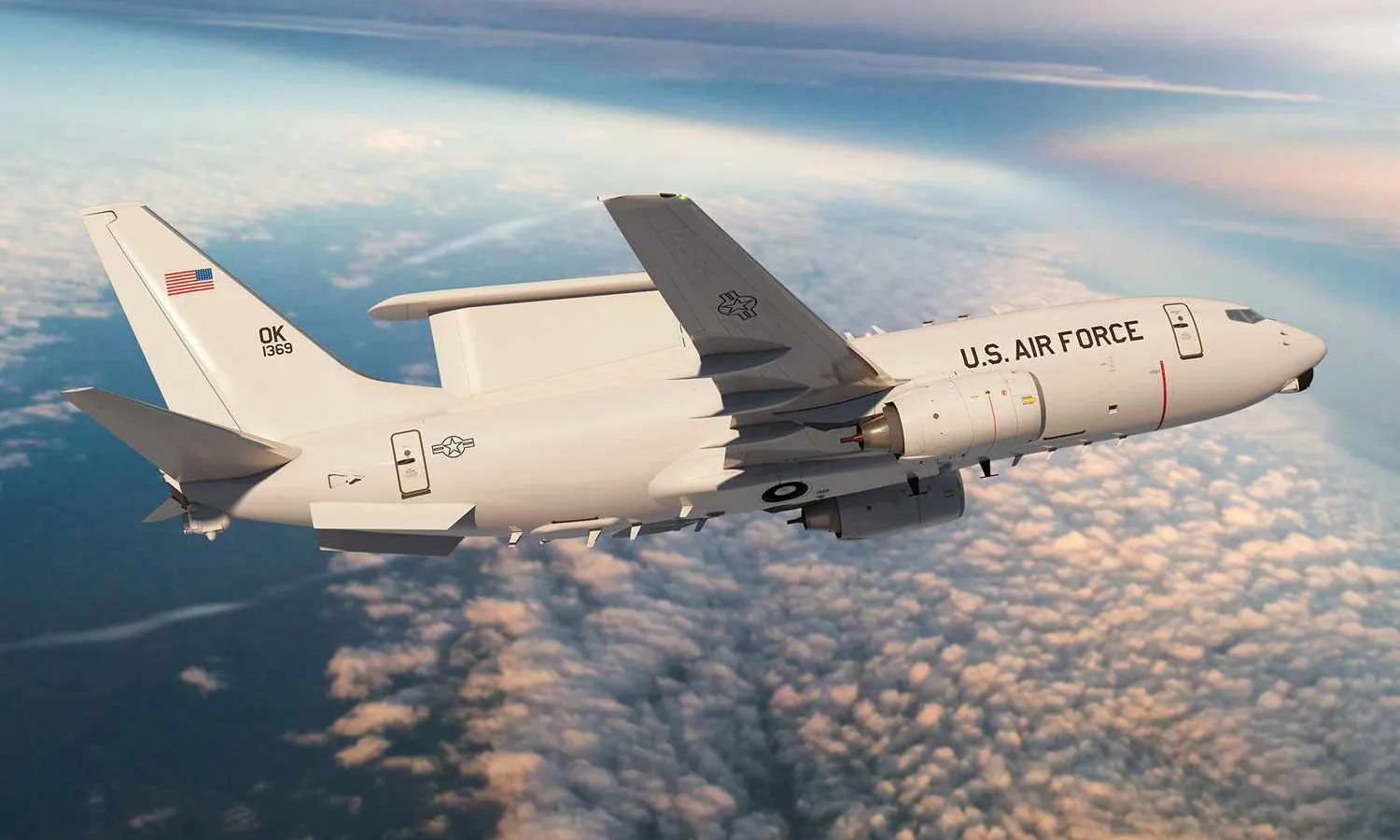
The Boeing E-7 was intended to replace the aging E-3 AWACS fleet, with a total of 26 aircraft planned. So far, only two prototypes had been contracted under a $2.6 billion deal, but the cost has since ballooned to $3.6 billion, with the aircraft’s first flight delayed until May 2027 and initial combat-ready jets pushed to 2032.
Instead, the Pentagon now proposes buying five E-2D Hawkeyes from the Navy and investing in space-based surveillance technologies to fulfill the airborne early warning mission, a strategy critics argue is risky and premature.

Congress holds final authority and has already signaled resistance by allocating $500 million for Wedgetail development in its proposed defense budget. Lawmakers and analysts warn that abandoning the E-7 could leave the Air Force without a robust battle management solution.
Defense analysts also point out that the E-7 had strategic appeal, being compatible with allies such as Australia, the UK, and future NATO operations, reinforcing alliance interoperability, a priority now seemingly in question.

USAF has decided to purchase the E-7 Wedgetail late only in 2022, amid the wear and obsolescence of E-3 Sentry.
Developed at the request of Australia, the E-7 Wedgetail is equipped with a fixed AESA radar antenna supplied by Northrop Grumman on top of the fuselage. The equipment can monitor the airspace in 360º in a synthetic way, unlike the radar mounted on a rotating disk of the Sentry.
About the Author

Ricardo Meier
Creator of the website that started in 1996 as a magazine. He also writes on Brazilian websites AUTOO, MOTOO and MetrôCPTM.