Defense
US B-1B Bombers Return to Fly Near Venezuela
B-1B Lancer bombers of the United States Air Force (USAF) conducted flights near Venezuela on Monday, in yet another operation involving multiple aircraft visible on public tracking platforms.
The aircraft departed from Grand Forks Air Force Base in North Dakota, refueling over Florida before approaching Venezuelan airspace.
The movement is part of a series of shows of force aimed at pressuring Nicolás Maduro’s government under the pretext of intensifying the fight against drug trafficking in the region. U.S. authorities consider drug cartels as ‘illegal combatants,’ justifying the use of advanced military means.
This was the third B-1B bomber mission in the area since October 15, indicating an increase in U.S. air operations in the Caribbean. The Pentagon did not conceal the movement, with flights being tracked publicly in real time.
In addition to the B-1Bs, the USS Gerald R. Ford aircraft carrier strike group was deployed to Latin America on October 24, expanding U.S. naval presence. The following day, the USS Gravely destroyer docked in Port of Spain, Trinidad and Tobago.

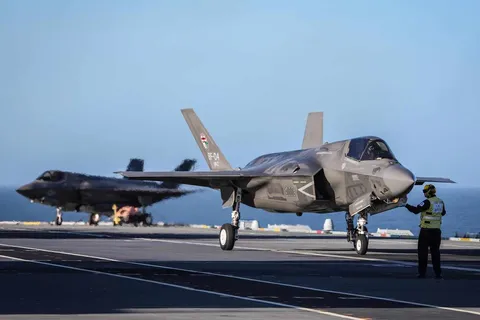
The U.S. Air Force has also intensified operations from Puerto Rico, with F-35 fighters, AC-130J turboprops, and MQ-9 Reaper drones conducting missions in the region. These assets provide both surveillance and strike capabilities against ground targets.
The U.S. government maintains formal accusations against Nicolás Maduro for alleged involvement in a conspiracy to smuggle cocaine and weapons, increasing diplomatic and judicial pressure.
Experts assess that the intensification of air and naval operations indicates a more active U.S. posture in monitoring and containing trafficking in Latin America. New missions in the region are expected as political and security tensions persist.
About the Author

Ricardo Meier
Creator of the website that started in 1996 as a magazine. He also writes on Brazilian websites AUTOO, MOTOO and MetrôCPTM.